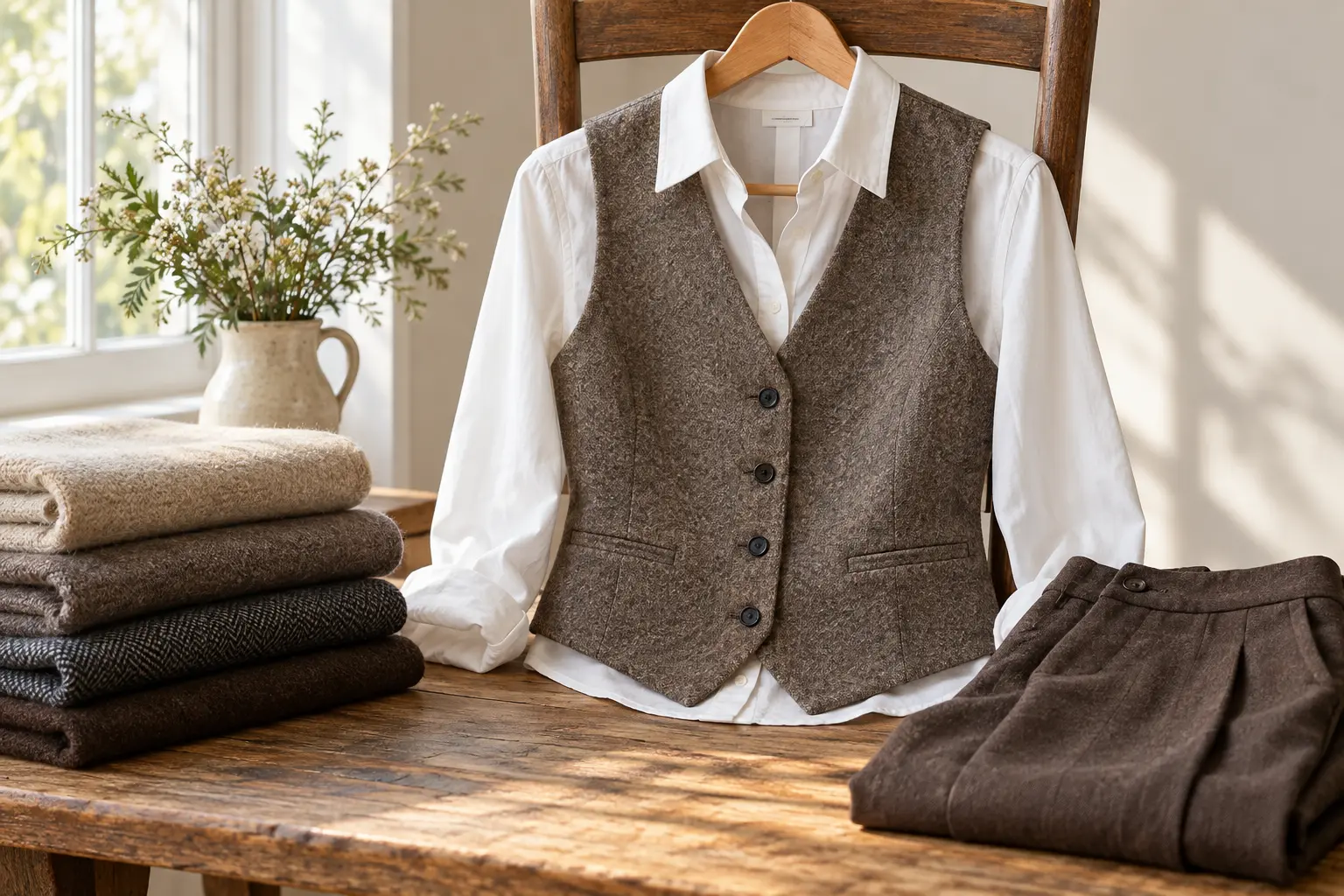
Decide whether the vest is a sweater or an outer layer
Women’s wool vests span several categories: fine-gauge sleeveless sweaters, tailored waistcoats, quilted wool-blend layers, and roomy outdoor pieces. The right choice depends on what the vest is meant to do. A fine knit can sit under a jacket, while a structured waistcoat may replace a cardigan at a desk. A substantial vest may be comfortable outside and too warm indoors.
Start with the outfits and temperatures you already have. If the vest needs to work over a shirt, measure that shirt. If it must fit over a thick sweater, measure the sweater and allow room for movement. A vest can be versatile because the arms remain free, but only when the shoulders, armholes, and front closure do not fight the layer underneath.
Read fiber content and fabric construction
Wool content tells you more than the word wool on a product title. Compare virgin wool, recycled wool, wool blends, merino, cashmere blends, and synthetic fibers in the composition. Fiber type changes warmth, softness, moisture response, durability, and care. A blend can improve stability or reduce cost, yet the percentage and weave still matter.
Look at knit density or woven structure. A dense boiled wool may block more wind than a loose open knit. A smooth worsted surface layers neatly, while a fuzzy or brushed surface creates visual warmth and more friction. Product photos can exaggerate loft, so use the stated weight, close-up images, and lining description as better evidence.
Fit the shoulders and armholes first
A vest has no sleeves to hide a poor armhole. The shoulder seam should suit the intended silhouette, and the arm opening should allow the shirt or knit beneath it to move without bunching. Compare shoulder width, chest, armhole depth, and finished length with a vest you already wear successfully.
Raise your arms, reach forward, and sit with the front closed. If the armhole cuts in, the back pulls, or the buttons strain, sizing up may help only if the shoulders remain proportionate. A dropped shoulder creates more room and a softer line; a close armhole can look tailored but needs accurate measurements. Check the neckline too, especially if you plan to wear a collared shirt.
Choose length and closure around the outfit
Cropped vests connect naturally with high-rise trousers and skirts, while hip-length styles can cover a shirt hem and work over dresses. Longer pieces add warmth but may compete with coats or make a small frame feel visually compressed. Compare the hem with your most-used bottoms before selecting a color.
Buttons, zippers, snaps, ties, and open fronts each create a different routine. A buttoned vest can look polished and needs a stable placket. A zip front closes quickly but adds hardware through the center. Inspect button spacing, zipper quality, and whether the closure remains comfortable when seated. Pockets should sit where your hands naturally rest rather than distorting the front.
Evaluate warmth without overpromising
Wool can help regulate comfort, but warmth is a system of fiber, density, lining, wind exposure, and layering. A sleeveless layer protects the torso while leaving the arms available for a jacket or shirt. It will not provide the same coverage as a coat. If you commute outside, assess the vest as part of the full outfit rather than as a standalone temperature rating.
Lining can reduce friction and add structure, while an unlined knit may feel softer and breathe differently. Check whether the vest has insulation, quilting, a high collar, or a wind-resistant outer face. These are separate specifications. Do not infer performance from a styled photograph of the vest under a heavy coat.
Check pilling, care, and storage
Wool can pill where the fabric rubs against bags, seat belts, and coat layers. Pilling is influenced by fiber length, yarn construction, friction, and use. Read care instructions and avoid treating a garment as machine washable unless the label allows it. Professional cleaning or careful hand washing may be required depending on the exact construction.
Store the vest clean and dry, folded or supported according to the maker’s guidance. Fine knits can stretch on a hanger, while structured pieces may hold their shape on a suitable hanger. Give it air between wears and keep it away from damp storage. Follow the label for ironing, steaming, and drying because wool can felt, shrink, or lose shape under the wrong heat and agitation.
Verify the listing and return details
Before ordering, confirm fiber percentages, lining, measurements, closure, pocket layout, color, care, delivery, and the retailer’s return terms. Product pages may use one title for several colors or constructions, so check the exact variant. If the vest is for a date-specific outfit, allow time to test it over the intended shirt and exchange it if the armholes fail.
Inspect the garment in natural light before removing tags. Check the seams, buttons, zipper, armhole finish, hem, lining, and surface for pulls or unexpected roughness. Photograph an issue promptly and retain packaging until the fit and construction are confirmed. This process is more reliable than judging softness from a single product image.
Final women’s wool vest checklist
A useful checklist includes wool percentage, other fibers, knit or woven structure, lining, insulation, shoulder width, chest, armhole, length, closure, pockets, care, storage, delivery, and returns. Match these details to the layer underneath and the temperatures you actually encounter. The most versatile color cannot compensate for a restrictive armhole or an impossible care routine.
The best women’s wool vest adds warmth and shape while keeping the arms free. Choose construction for the job, fit over the layer you will wear, and care requirements for the time you have. Confirm current specifications on the retailer or maker page before purchase.


