Decide what the dress needs to do
A linen dress may be chosen for warm weather, travel, casual work, or an event, and each use changes what matters. For a day of walking, movement and comfortable straps may matter more than a crisp waist. For a work setting, lining, neckline coverage, and a shape that layers under a jacket deserve closer attention. Write down the setting and the shoes you expect to wear before comparing product pages.
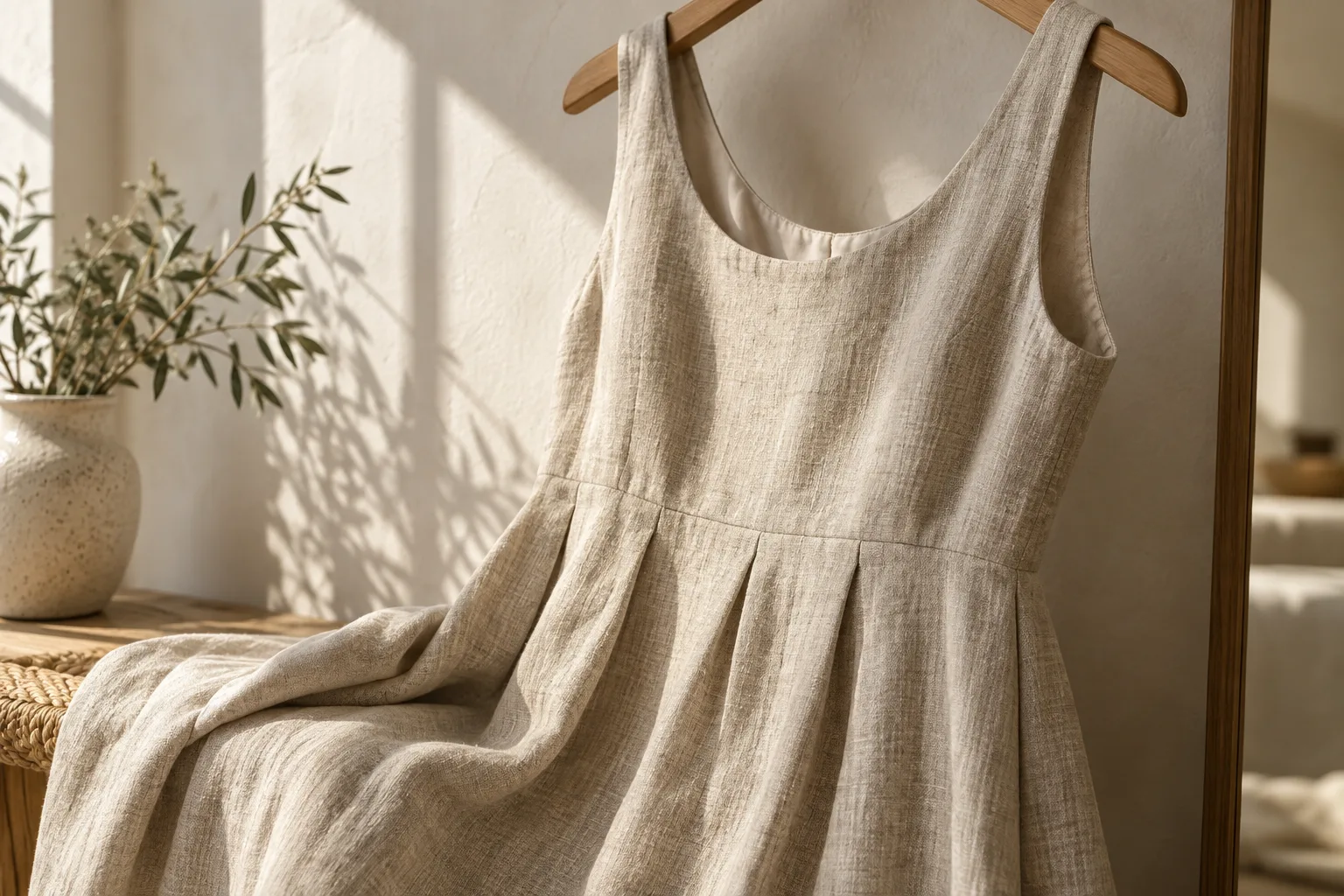
Linen has a relaxed visual character, but the cut can still be polished. A shirt dress gives an adjustable waist and familiar structure; a shift can feel uncomplicated; a gathered or tiered shape adds movement but may use more fabric. The right silhouette depends on how you want the dress to sit when you walk and sit, not only how it looks in a static image.
Read the fiber blend instead of trusting the title
A listing that calls a garment linen may describe pure linen or a blend. Linen-cotton, linen-viscose, and linen-synthetic combinations can drape and crease differently. The fiber content does not guarantee a particular level of coolness or quality, so consider it alongside the weave, weight, lining, and care instructions. The FTC explains the labeling information consumers can look for when comparing textile products.
The weave changes how the dress feels and how much light passes through it. A loosely woven fabric can feel airy yet reveal more in direct sun; a denser weave may provide better coverage but feel heavier. If the product page does not state the fabric weight, use close-up photos and customer images as clues, not proof. Ask the retailer for missing measurements or construction details when they would change your decision.
Test coverage and lining in realistic light
Pale linen deserves an opacity check. Imagine the garment near a bright window rather than under warm indoor lighting, and inspect whether pockets, seams, or underlayers might show through. A lining can improve coverage and help the skirt move smoothly, but it adds warmth and another fabric layer. If the dress is unlined, consider whether its color, weave, and intended setting still make it comfortable to wear.
Also inspect the lining length and attachment. A lining that ends well above the hem can change coverage when you sit or climb stairs. A lining that twists or clings may undermine an otherwise comfortable dress. Look for details about the lining fiber and care because it may need different handling from the outer fabric. Product photos should show more than the front; side and back views help reveal how the dress is constructed.
Use garment measurements to assess fit
Start with the measurements that influence movement: bust, shoulder, waist, hip, and finished length. Compare the dress with a similar garment you already wear rather than mapping a size label from another brand. A woven linen dress may offer less stretch than a knit, so a close fit at the shoulders or hips can become uncomfortable during a long day. Check whether the listing describes the shape as fitted, relaxed, or oversized.
Length is especially important when the skirt is full or the hem is close to the ankle. Measure a dress you own from the same point and compare the result with the product chart. If you plan to wear flat sandals, a long hem can catch underfoot; with a heel, the balance changes. Pockets can also affect fit: a side pocket that pulls open is a signal that the hip area may need more ease.
Choose details that match the setting
Necklines, sleeves, and closures determine how easily the dress moves between settings. A collar and buttons may feel more structured, while a square or scoop neck can be simpler for casual wear. Adjustable straps allow some flexibility, but they do not fix a bodice that is too wide or too narrow. Check whether the garment has a waist seam, darts, or a drawstring and whether those details can be adjusted without disrupting the shape.
Color and texture should connect to clothes and shoes you already own. Natural flax and cream highlight the weave; navy, black, or darker earth tones can feel less delicate and may be easier to style across seasons. Prints can make a simple silhouette feel more event-specific. Build at least three combinations with existing layers and footwear before buying. That test helps separate a useful warm-weather dress from a one-outfit impulse.
Plan for creasing and garment care
Linen creases with wear, particularly at the waist, elbows, and knees. The question is whether that lived-in finish suits the occasion and the fabric’s intended character. Read the permanent care label and follow its washing, drying, and pressing directions; the FTC’s care-labeling rule explains why sellers provide regular care instructions for textile apparel. A blend may have different requirements from pure linen, so avoid assuming one method works for every dress.
Consider how the dress will be packed and stored. A travel dress may be rolled or folded, but it will still show creases after a long journey. A steamer or iron can help only when the garment label permits that treatment. Hang the dress with enough support for its shoulders and avoid leaving it compressed under heavier pieces. Care convenience is part of value, especially if the dress is intended for frequent warm-weather wear.
Make the final comparison
Before checkout, confirm the size chart, garment length, fiber content, lining, delivery estimate, and return terms. Check whether sale items or special colors have different return conditions. If the dress is for a fixed event or trip, allow time for an exchange and a simple alteration. Keep the product page and order confirmation until you know the fit works.
Women’s linen dresses are easiest to compare when the decision is separated into fabric, coverage, fit, and care. Choose the blend and weave for the conditions you expect, then confirm that the silhouette works with your movement and existing wardrobe. A dress that looks relaxed, feels comfortable, and can be maintained within your routine is more likely to earn repeat use than one selected only for its color or styling.