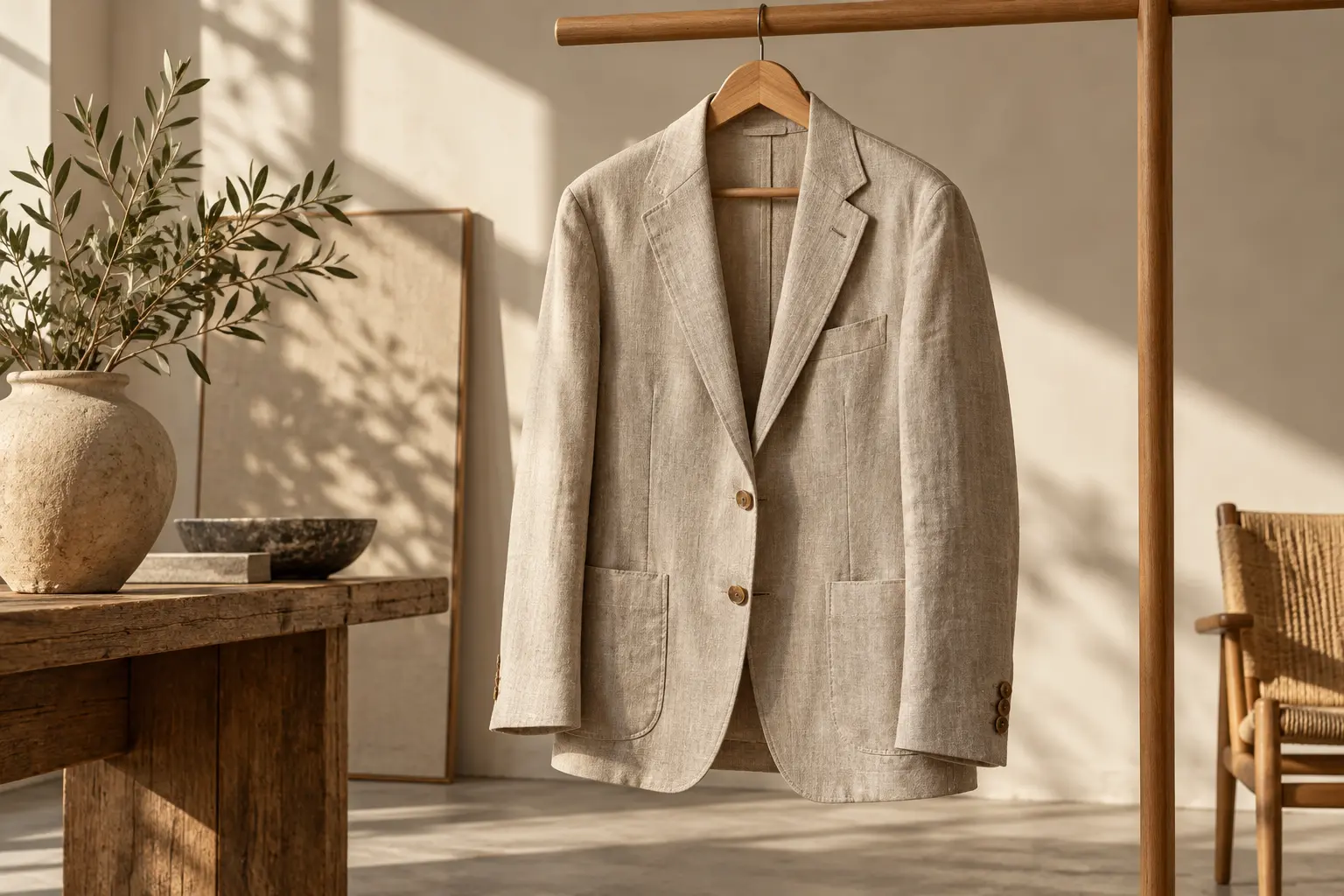
What should women’s linen blazers do?
Women’s linen blazers sit between a shirt jacket and traditional tailoring. They can add structure to a summer dress, make denim look deliberate, or provide a light layer for an air-conditioned office. The useful comparison starts with the job. A blazer for commuting needs enough shoulder and sleeve room for movement; one for formal work needs a cleaner front and more controlled wrinkling; one for travel should be easy to fold and refresh.
Linen is a fiber, while the final garment depends on weave, weight, blend, lining, and finishing. A crisp linen-blend blazer may hold a sharper outline than a soft, loosely woven style. Neither is automatically better. Decide whether you want visible texture and relaxed creasing or a smoother jacket that behaves more like conventional tailoring. The title alone cannot answer that question, so read composition and construction details.
Check fiber content and weave
Read the complete fiber statement before assuming a garment is pure linen. Linen-cotton blends can soften the hand and change how the jacket drapes. Linen-viscose or linen-lyocell blends may feel fluid, while a linen-polyester blend may resist some creasing and have a different care routine. The right choice depends on your tolerance for texture, heat, and maintenance. A glossy surface is not proof of a particular fiber or quality level.
Weave density affects opacity, airflow, and shape retention. A very open weave can feel cool but may look more casual and provide less coverage. A denser fabric can support lapels and pockets while feeling warmer. Look for close-up images, the fabric weight if supplied, and photographs with the jacket fastened and open. If a listing gives no composition or care information, the missing data is a reason to pause.
Fit the shoulder, bust, and sleeve in that order
The shoulder is difficult to alter, so use it as the first checkpoint. Compare shoulder width and seam placement with a blazer you already wear successfully. A relaxed linen blazer may intentionally use a dropped shoulder, but the seam should match the style shown. Then check bust and upper-arm ease. A jacket that closes across the front can still restrict movement if the armhole is high or the sleeve is narrow.
Judge sleeve length over the top you plan to wear, with your elbows bent. A cropped sleeve can suit warm weather, while a full sleeve offers more coverage and a stronger tailored line. Confirm finished length against a familiar jacket because model height changes proportion. If measurements fall between sizes, use the product chart and return terms together rather than relying on a general label.
Inspect lining, closure, and pocket placement
Lining changes how a blazer feels in heat and how easily it slides over a blouse. A fully lined jacket may look polished and resist some rumpling, but it can be warmer and heavier. A half-lined or unlined style may breathe better while showing more of the inside seam finish. Check whether the sleeves are lined, because sleeve friction often decides whether the jacket layers over knitwear or a textured dress.
Buttons, hooks, and an open front create different fit expectations. If the jacket is meant to close, check whether the lapels lie flat without pulling. Pockets should sit smoothly when empty and remain usable without distorting the front. Flap pockets may add structure; patch pockets create a more casual impression. Side and back images can reveal whether vents, darts, and seams support the intended silhouette.
Choose color and proportion for repeat wear
Natural flax, cream, navy, black, tan, and muted blue each set a different level of formality. Pale shades highlight the weave and can show marks quickly. Dark shades may coordinate easily but can reveal lint or fading. Test the color with three outfits already in your wardrobe: trousers, denim, and a dress or skirt. A blazer that needs a new outfit every time will see less use.
Proportion matters as much as color. A long relaxed blazer can balance narrow trousers and column dresses, while a shorter style can work with high-rise bottoms. Consider the hem against the layers beneath it and check whether sleeves or lapels compete with your usual tops. The most useful women’s linen blazer adds a layer without forcing your wardrobe into one styling formula.
Plan for creasing and care
Linen creases as it moves, especially at elbows, lapels, and the back of the waist. That texture can be part of the fabric’s character, but it may not suit every workplace or event. Read the permanent care label and follow its directions for washing, drying, pressing, or professional cleaning. A blend may require different handling from pure linen, and the garment label governs the final decision.
Store the blazer on a shaped hanger so the shoulders keep their form. Give it air between wears and avoid compressing it under heavy garments. If the listing describes it as packable, test how it recovers after folding before removing tags. Use a steamer or iron only when allowed by the care instructions. Maintenance is part of the purchase, not a detail to solve later.
Final linen blazer checklist
Before checkout, record fiber percentages, shoulder, bust, sleeve, and finished-length measurements, lining, closure, pocket design, care method, delivery estimate, and return terms. Check the exact color and size because product pages may show several constructions under one family name. If the blazer is needed for a fixed date, leave time for an exchange and a simple adjustment.
The best women’s linen blazer balances breathable texture with usable structure. Choose the fabric for your climate, the fit for the layer beneath it, and the care routine for the time you actually have. Linen can make a wardrobe feel lighter and more polished only when the jacket works with movement, the rest of the closet, and the maintenance you will provide.


