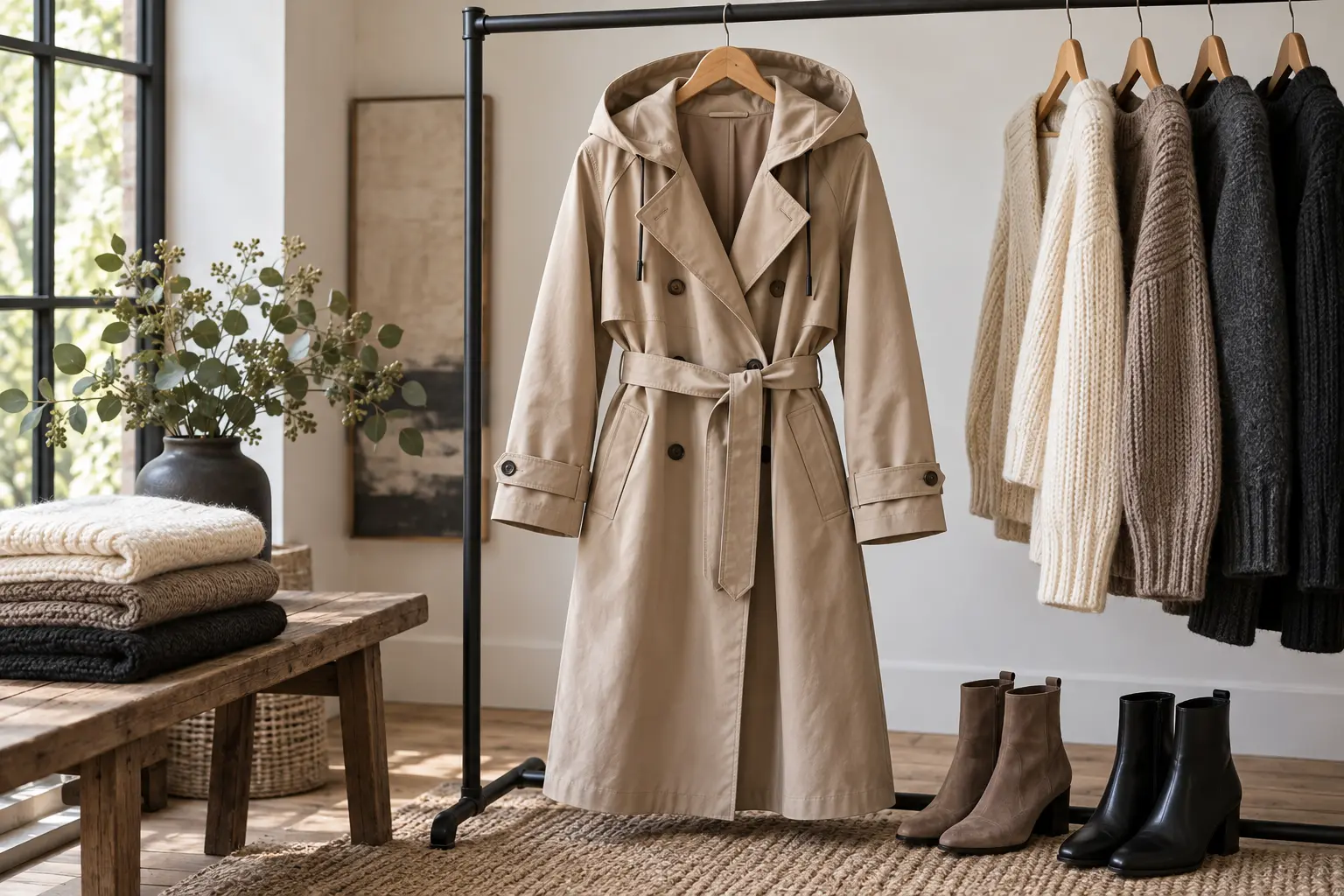
Start with the weather job
A women’s hooded trench coat can be a polished commuter layer, a light rain shell, or a transitional coat that mainly blocks wind. Those jobs overlap in styling but not in construction. Decide whether you need reliable rain coverage, a removable hood, warmth over knitwear, or simply an outer layer that looks more structured than a jacket. The product title often compresses several different designs into one phrase.
Write down the conditions the coat must handle: steady rain, short showers, wind, cool mornings, or heated indoor spaces. A coated fabric may shed light rain while remaining less breathable than a woven shell. A lined trench can feel more substantial and less packable. Choose the weather brief first so a decorative belt or classic double-breasted front does not distract from the actual use.
Inspect hood shape and adjustment
The hood is the feature that separates this coat from a standard trench, so check it as carefully as the body. Look for a drawcord, rear adjuster, brim, or collar construction that keeps rain from running toward the face. A hood that collapses into the neck may look neat when unused but can offer little coverage when the weather changes.
Peripheral vision matters for walking, cycling, and crossing streets. A deep hood can protect the face while narrowing the view if it cannot be adjusted. Compare the hood opening with your hairstyle and any hat you expect to wear. Check whether the hood is removable, permanently attached, or stored in the collar, then consider whether that mechanism creates bulk at the back of the neck.
Separate water resistance from waterproofing
Water-resistant, water-repellent, and waterproof are not interchangeable descriptions. Water-repellent finishes can help droplets bead on the surface, while waterproof protection depends on the fabric, membrane or coating, seam construction, and closure design. If a product gives a performance rating, read the definition and test conditions instead of treating the word as a guarantee for every storm.
Seams, zippers, pocket openings, cuffs, and the front placket are common weak points. A coat can have a water-resistant face fabric and still allow water through an exposed zipper or unsealed seam. Look for storm flaps, adjustable cuffs, and pocket construction that suits the way you carry a phone or keys. Keep the maker’s care instructions because some finishes are reduced by heat or aggressive washing.
Choose fit around the layers
Measure the chest, shoulder, sleeve, and finished length against a coat that already works over your clothes. A trench cut close to the body may look sharp over a shirt and fail over a sweater. A generous cut offers more movement but can swallow a smaller frame. Compare the garment measurements rather than assuming the same size across outerwear brands.
Move your arms forward, reach for a bag, and sit while wearing the layer you expect to use most. Check whether the armhole pulls, the belt shifts, or the back vents open too far. Sleeve tabs can fine-tune the fit, but they cannot solve a narrow shoulder. If you want to wear a blazer underneath, measure that combination before removing tags.
Compare fabric, lining, and breathability
Cotton blends, polyester shells, coated synthetics, and technical laminates each create a different balance of hand feel, noise, breathability, and care. A crisp shell can resist light weather and make more sound when moving. A soft twill can drape well and need more attention to wet conditions. Read the fiber composition and lining description rather than relying on words such as classic or elevated.
The lining affects how easily the coat slides over knitwear and how comfortable it feels indoors. Mesh or partial lining may support airflow, while a full lining can make the coat feel smoother and more substantial. Check whether the sleeves are lined, whether the back vent is functional, and whether the hem is finished cleanly. These details influence daily use more than a decorative buckle.
Check closures, pockets, and movement
A double-breasted front provides visual structure but adds fabric overlap and can feel bulky when the coat is tied. A zip front may seal quickly, while buttons can be easier to repair or harder to close with cold fingers. Test the closure with the coat layered over a sweater. The belt should have a stable route and enough length to tie without constantly slipping loose.
Pockets need to hold the objects you actually carry without distorting the front. Look for secure zippers or flaps if the coat will be used in rain, and check whether the pocket bags are large enough for a phone. Side vents and a back vent affect stride. Walk, climb a few steps, and sit to see whether the hem restricts movement or catches on a bag.
Plan care, storage, and delivery
Read the permanent care label before ordering because a weather shell may require a specific wash cycle, low heat, or professional cleaning. Do not assume a water-repellent finish can be restored with any household spray. Hang the coat on a supportive hanger, allow it to dry according to the label, and avoid storing it damp or tightly compressed.
Outerwear is easy to misjudge from a photograph, so inspect the item before removing tags. Check the hood, seams, lining, belt, snaps, zippers, and hem in daylight. Save the packaging and confirm the current return terms for the exact color and size. If the coat is needed for a trip or work date, leave time for a fit exchange and any weather-specific alternative.
Final women’s hooded trench coat checklist
Before checkout, record the hood adjustment, shell fiber, lining, stated weather protection, seam and closure design, pocket security, shoulder and sleeve measurements, finished length, vent, belt, care method, delivery estimate, and returns. Compare the coat against the layers and shoes already in your wardrobe. A neutral color helps versatility only when the construction supports the conditions you meet.
The best women’s hooded trench coat is a controlled compromise between coverage, breathability, movement, and polish. Choose the hood for visibility, the shell for the real weather, and the fit for the layer underneath. Verify current product specifications and retailer terms before buying because performance language and inventory can change.


