Define the workday the trousers need to handle
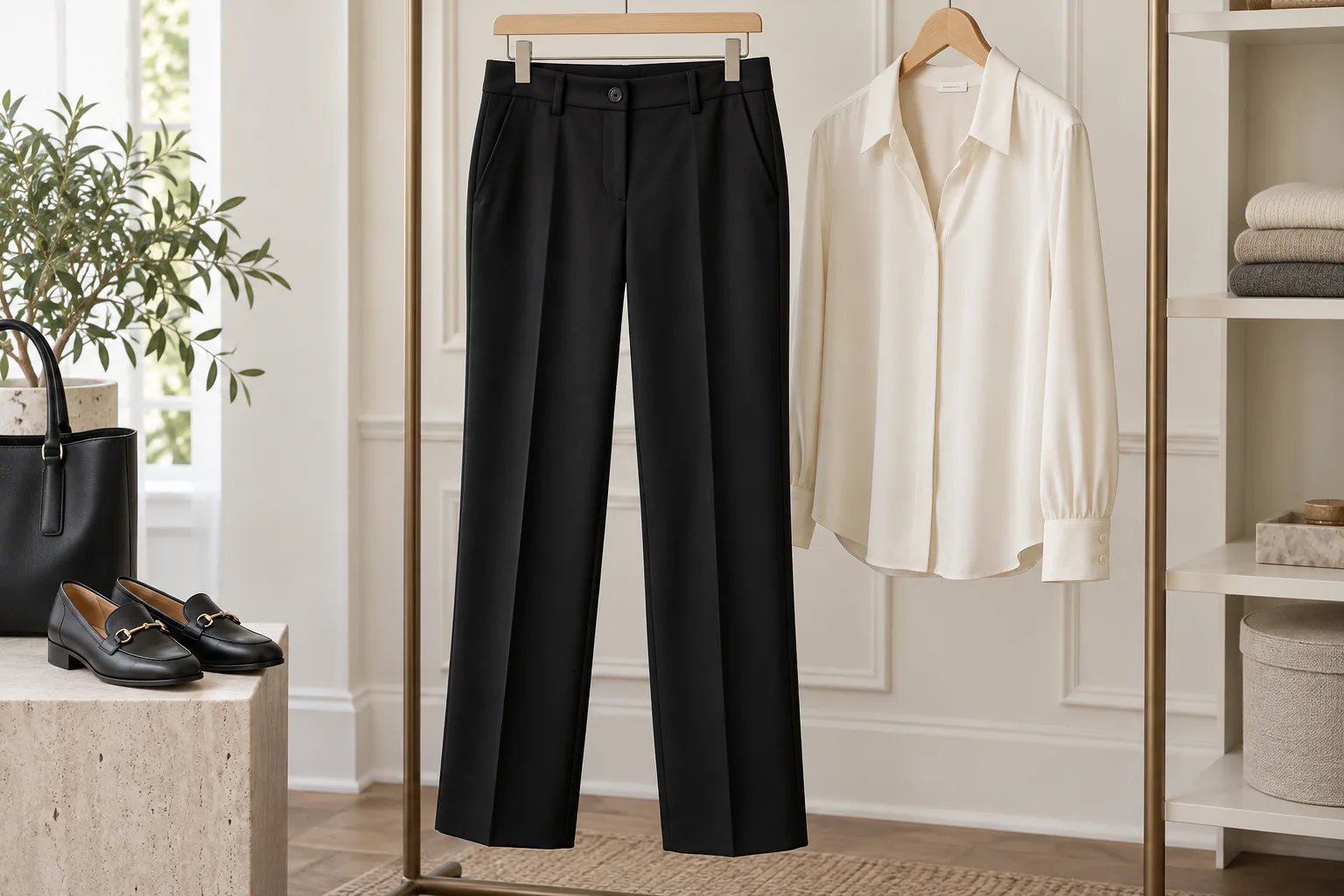
Black work pants can mean tailored office trousers, travel-friendly pull-ons, or a polished option for a mixed schedule. Start by listing the situations the pants need to cover: commuting, sitting at a desk, walking between locations, or standing for long periods. A crisp woven can look formal but feel restrictive if the rise and thigh ease are wrong. A stretch fabric may move easily but need enough recovery to keep its shape through the day.
The workplace dress code sets the boundary, while your routine decides the details. A straight leg can fit under a coat and work with flats; a wider leg may look more relaxed and need a deliberate hem. A pull-on waist can be convenient for travel, but its finish should suit the tops you wear. Choose the most common workday as the test case rather than buying for a rare meeting.
Choose rise and waistband for seated comfort
Rise affects how the waistband sits when you stand and when you sit. A high rise can work well with tucked shirts but should not press into the ribcage during a long meeting. A mid rise may pair easily with untucked tops and feel less restrictive. Compare the front and back rise measurements with trousers you already find comfortable; a size chart that lists only waist and hip can leave this important detail unclear.
Waistband construction determines stability. A flat front with elastic at the back can bridge polished appearance and flexibility. A full elastic waist may be comfortable but can add bulk under a tucked blouse. A fixed waistband with a hook and zipper creates structure, yet requires a closer size match. Sit, bend, and walk in the trousers after trying them on. The band should not roll, gap, or require repeated adjustment.
Assess fabric recovery and black color
Fiber content and weave affect drape, stretch, and care, but no single blend guarantees performance. A woven with a small amount of stretch may give extra movement; a knit can feel softer but may show knees or pockets after extended sitting. Check whether the fabric returns smoothly after a seated period and whether the listing describes its weight. Black fabric can fade or show lint, so examine the finish and care label before deciding.
Opacity matters even in a dark color. A thin fabric may outline pocket bags or underlayers under bright office lighting. Look for a lining or a substantial weave if coverage is important. Close-up images and customer photos can help show how the material behaves, though they cannot replace the exact garment in person. If possible, order from a retailer with clear return terms and test the pants in ordinary daylight before removing tags.
Check pockets and seams for real use
Pockets should match what you carry and stay flat when empty. Deep side pockets are useful for a phone, but openings can pull outward if the hip area is too close. Welt pockets create a cleaner back view but may be decorative or too shallow for daily use. Check pocket depth, lining, and placement in the product details. A pocket that changes the drape can matter more than a small difference in fabric composition.
Seams and closures deserve a quick inspection. The zipper should lie flat, the hook should close without strain, and the inseam should not twist around the leg. Pressed creases can make a trouser look sharper but may need maintenance. Look at the seat and thigh shape in side images, because front-facing product photos can hide pulling. If the trousers are intended for regular wear, prioritize stable seams and an easy-to-maintain finish.
Match leg shape to shoes and hems
A straight leg is often the simplest shape to combine with loafers, low heels, or ankle boots. A tapered leg can feel neat in a crowded commute, while a wide leg creates a longer line and may require a higher shoe or precise hemming. Compare the finished inseam with shoes you actually wear. A hem that drags in rain or catches under a heel can turn an otherwise good pair into a wardrobe problem.
Build a small outfit test with two work tops and two pairs of shoes. If the pants only work with a particular jacket or heel, their weekly value may be limited. Black can coordinate with many colors, but different fabric finishes may clash when worn together. Matte trousers pair easily with a range of textures; a slight sheen may read more formal. Let the existing wardrobe set the standard for versatility.
Plan for washing and repeat wear
The care label should fit your schedule. Some trousers can be machine washed; others may require special handling or pressing. Follow the exact garment instructions, as a generic rule cannot account for its fiber blend, lining, or finish. The FTC’s care-labeling guidance explains why apparel sellers provide regular care instructions. If the trousers will be worn weekly, cleaning convenience belongs in the purchase calculation.
Black clothes often benefit from being washed with similar colors and handled according to the label, but the exact instructions differ by garment. Consider how quickly the pants dry and whether they need ironing before work. Rotate between pairs if you want to reduce wear and avoid relying on a single garment. A pair that looks polished after ordinary care is more valuable than one that requires a routine you are unlikely to maintain.
Use a pre-order checklist
Confirm waist, rise, hip, inseam, pocket details, fabric composition, and the retailer’s return policy for the exact color and size. Compare measurements with a pair already in your closet, and check whether the item is sold in petite, regular, or tall lengths. If you need the pants for a specific work date, allow time for delivery, a possible exchange, and hemming.
Women’s black work pants should fit the way your workday unfolds: stable at the waist, comfortable through sitting and walking, and compatible with your shoes. Fabric, pockets, and care determine whether they remain easy to wear after the first week. Make the comparison around those practical tests, then choose the silhouette that serves most of your schedule instead of chasing a label or trend.