Read the event before choosing the outfit
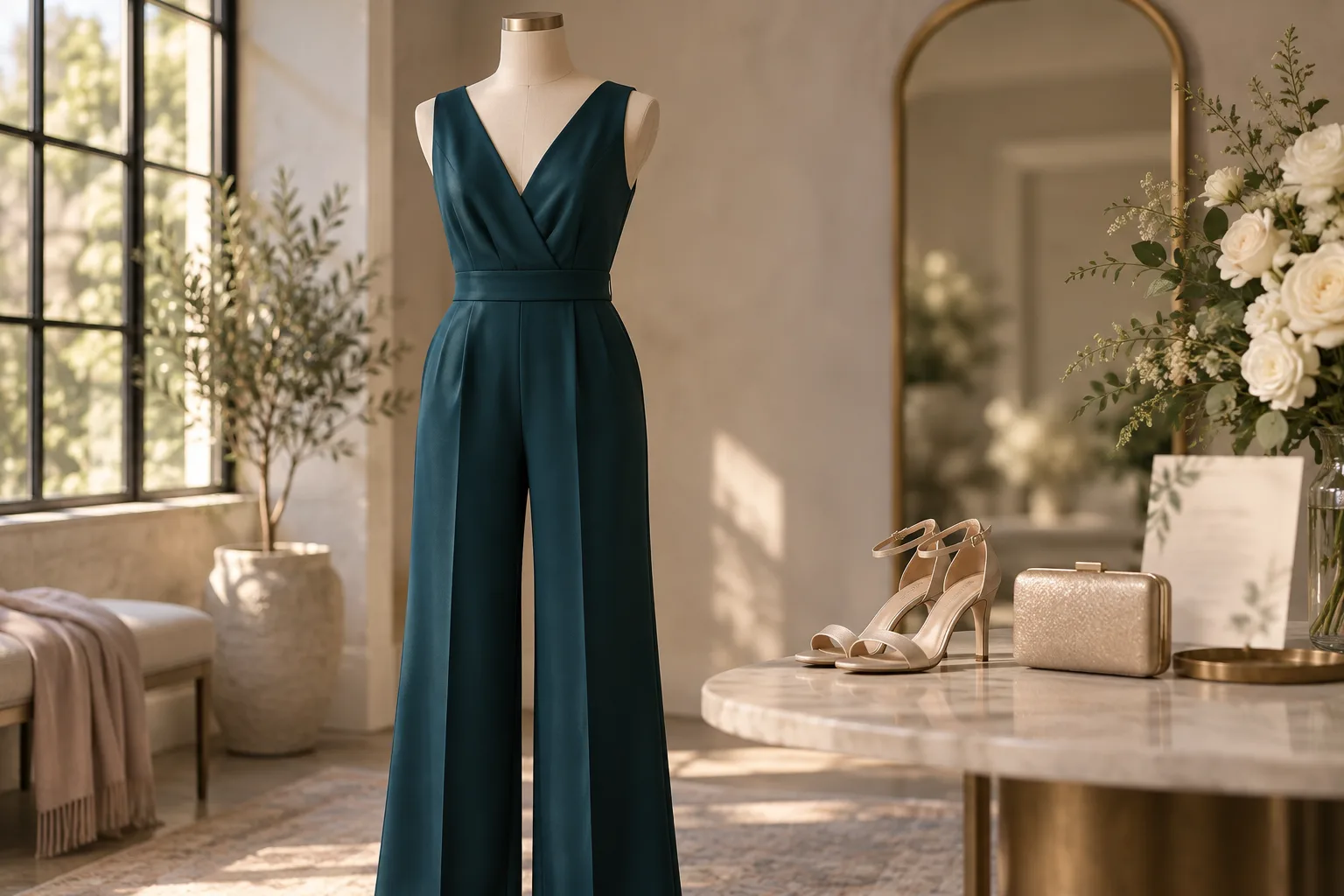
A wedding guest jumpsuit can be appropriate across several dress codes, but fabric, tailoring, and styling determine how formal it reads. Start with the invitation, venue, and time of day. A structured crepe-like fabric and clean lines may suit a formal reception; a softer cotton blend can feel more relaxed for an outdoor afternoon. If the invitation gives a specific dress code, use it as the constraint rather than assuming a jumpsuit automatically makes the outfit casual or formal.
Consider the ground and the schedule. A long ceremony on grass, a gravel path, or a night of dancing changes shoe and hem requirements. If travel is involved, wrinkle recovery and packability matter. The garment should be suitable for the event while still allowing you to move comfortably between ceremony, dinner, and the trip home.
Fit the torso before fine-tuning the leg
The torso length is one of the most important measurements in a one-piece garment. If the rise is too short, the shoulders or crotch may feel pulled; if it is too long, the waist seam can sit low and distort the proportions. Compare shoulder-to-crotch or torso measurements when available, and check the retailer’s fit notes for petite, tall, or long-torso options. A familiar dress size alone cannot predict torso comfort.
Then check bust, waist, hip, and rise independently. A defined waist may look polished but needs enough room for sitting after a meal. A relaxed waist can be comfortable and forgiving, though the silhouette may feel less tailored. If the garment has a belt or tie, confirm that it can be adjusted without pulling the fabric into folds. Measurements from a jumpsuit you already own are often the most useful comparison.
Evaluate the leg, hem, and movement
Wide legs create a fluid formal line, while tapered or straight legs can make walking and sitting easier in crowded spaces. Try to assess how the fabric falls from the hip, not only how wide the hem looks in a product image. Check whether the leg catches on shoes or moves around the ankle. If a hem alteration is likely, leave time to tailor it with the shoes intended for the event.
A jumpsuit should let you take a full stride, sit with the knees bent, and reach overhead without tugging at the shoulders. Pockets can add convenience but may pull open at the hip if the fit is tight. A fitted lining can limit movement even when the outer fabric looks relaxed. Look for front, side, and back views, and read whether the garment includes stretch or a functional closure that supports movement.
Plan for the practical side of a one-piece
Restroom access is a practical detail worth considering before a long event. A back zipper, wrap fastening, or multiple closures can change how easy it is to remove and put the garment back on. Check where the closure begins and whether you can reach it without help. This is a normal comfort criterion, just like checking whether a dress has a lining or whether trousers have a usable pocket.
Layering also affects convenience. A blazer, shawl, or coat should work with the jumpsuit’s neckline and sleeve shape. If the event is outdoors, consider temperature changes after sunset and how a long hem behaves on damp ground. A compact layer that can be carried or left at a table makes the outfit more adaptable than relying on the jumpsuit alone.
Choose color and accessories with the setting in mind
Use the invitation and local event context to guide color selection. Avoid assuming that one shade will suit every wedding or every cultural tradition. If the couple has provided a palette or specific request, follow it. Otherwise, choose a color and print that feel appropriate to the formality and season. Dark neutrals can be re-worn more easily, while a strong color may make the outfit feel more event-specific.
A jumpsuit is already a complete silhouette, so accessories can stay focused. A defined shoe and small bag can make a simple shape feel deliberate. A statement neckline may need less jewelry, while a plain neckline can support a pendant or earrings. Make sure the shoe heel works with the hem and the venue surface. A beautiful accessory that makes walking difficult is a poor trade for an event that involves movement.
Check fabric, lining, and care
Fabric choice influences drape, heat, and how polished the jumpsuit remains after sitting. Lightweight wovens may feel cool but show more creasing; heavier fabrics may hang cleanly but become warm indoors. Check fiber content, lining, and care instructions together. The FTC provides guidance on textile fiber disclosures and care labeling, while the item’s own label governs how that exact garment should be maintained.
If the event is a fixed date, order early enough to try the jumpsuit with the intended undergarments and shoes. Keep tags attached until the basic fit is confirmed, and check whether sale or special-order items have different return terms. A small alteration can improve the hem or waist, but a torso mismatch is harder to correct. Leave enough time for the retailer’s delivery window and any tailoring.
A final event-ready checklist
Before deciding, check the dress code, torso length, rise, hip ease, closure, hem, care label, and return policy. Try the full set of movements you expect at the event: walking, sitting, dancing, reaching, and using the restroom. Confirm that the shoes and layer work with both the garment and venue. These checks reduce the chance that the jumpsuit looks right in a photo but becomes a distraction after the ceremony.
Wedding guest jumpsuits work best when their polish comes from fit and finish rather than extra decoration. Match fabric and color to the event, choose a shape you can move in, and account for the one-piece logistics. A considered purchase should carry you through the full schedule with minimal adjusting and should remain useful for other dinners or celebrations after the wedding.