
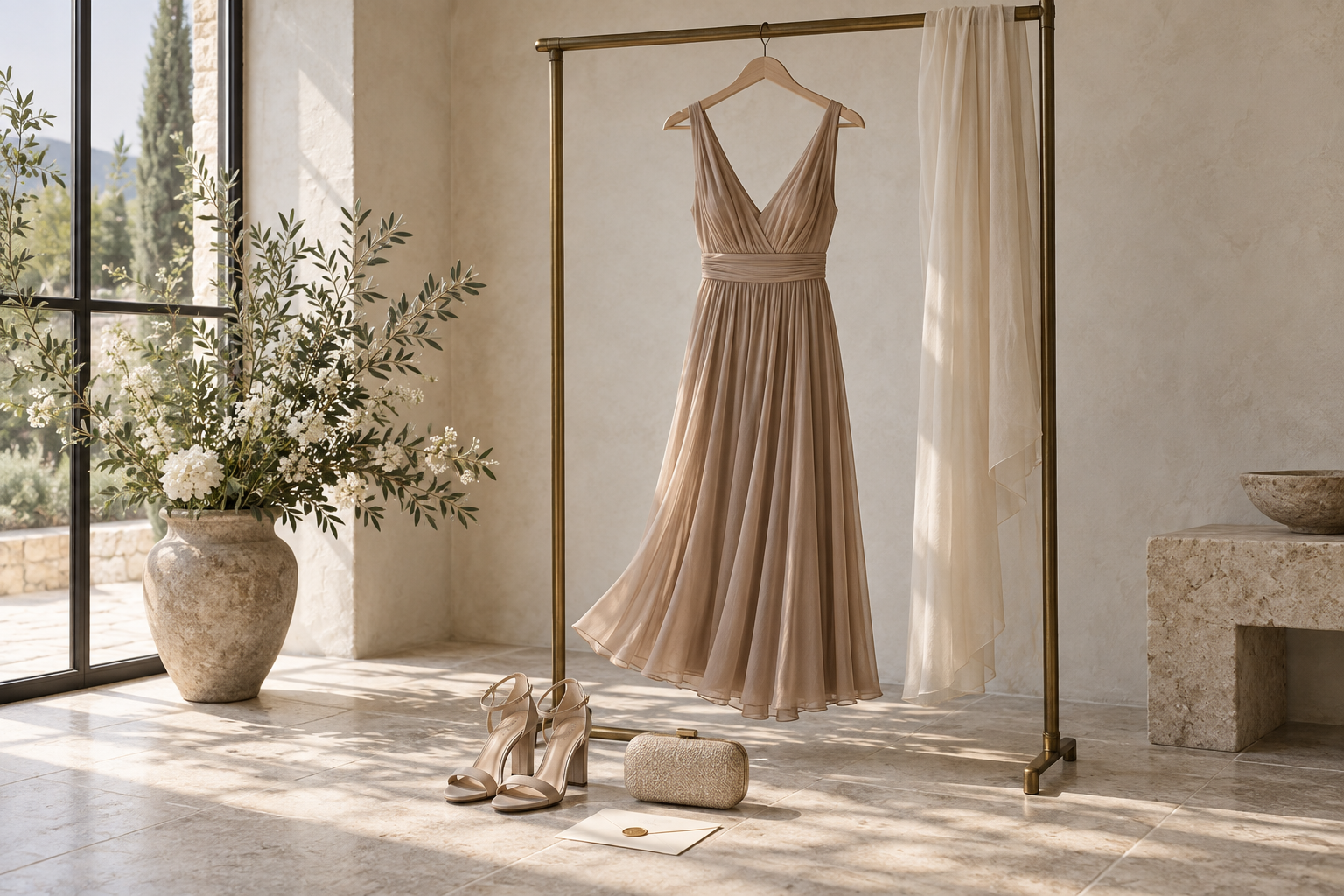
Read the invitation before the product page
The phrase “wedding guest dress” covers several different decisions. A formal evening wedding, a garden ceremony, a city reception, and a beach celebration can all call for different levels of structure, coverage, and footwear. Start with the stated dress code, then note the time of day, season, venue surface, and expected weather. Those details narrow the useful options faster than browsing by color alone. If the invitation is vague, a polished midi or tea-length dress in a fabric with some structure is usually easier to adapt than a very casual jersey style or an overtly dramatic gown.
Dress codes are boundaries, not a demand to buy a costume. Black tie generally calls for a formal floor-length or elevated midi approach, while cocktail attire leaves more room for a shorter hem and sharper tailoring. Semi-formal and dressy casual still require attention to fabric, shoes, and finishing details. Avoid white, ivory, or pale shades that could read as bridal unless the couple has expressly requested them. Also check for cultural or venue-specific guidance before placing an order.
Choose the silhouette around the day you will spend
A ceremony and reception can involve standing, sitting, walking across grass, climbing steps, hugging guests, and dancing. The dress should allow those movements without constant adjustment. A wrap or faux-wrap shape can provide useful waist flexibility, while a column or slip silhouette creates a clean line but may need more confidence in the fit. An A-line or softly pleated skirt can offer room for movement without looking informal. Test the actual actions you expect to make: sit in a chair, raise your arms, take a long stride, and turn at the waist.
Neckline and back coverage matter as much as the hem. A low back may look elegant in a product photograph yet become inconvenient with a bra, a shawl, or a cool evening. Halter and one-shoulder styles can be attractive but should be judged for neck pressure and support. If the event includes a religious ceremony or conservative venue, choose a dress that works with a removable layer rather than relying on a last-minute cover-up that changes the whole proportion.
Let the venue decide the fabric and finish
Fabric determines how the dress feels after several hours and how formal it appears in person. Chiffon, crepe, satin, lace, cotton poplin, and stretch jersey each create a different relationship between drape, shine, breathability, and wrinkle visibility. A lightweight fabric may suit a hot outdoor ceremony but can need a lining to prevent transparency or clinging. A heavy satin can look polished at night and feel warm under summer lights. Read the fiber composition and care label instead of trusting a style name such as “silky” or “luxury.”
The venue also changes the practical finish. Grass, gravel, and uneven paths favor a hem that will not trail and shoes that can handle the surface. A formal indoor room can support more delicate fabric, though the dress still needs to tolerate seated movement and contact with chairs. Check whether the lining is shorter than the outer layer, whether the fabric catches on jewelry, and whether the finish shows perspiration. These details decide comfort long after the first mirror check.
Fit the dress to your measurements, not the model
Product photography is useful for mood and nearly useless for predicting your finished hem. Compare your bust, waist, and hip measurements with the garment chart, then inspect the finished length and the model height listed by the retailer. A dress can fit the largest measurement and still pull at the armhole, sit too low at the waist, or finish in an awkward place. Pay special attention to high-stretch fabrics, where a smaller size may look neat in a photo but create unwanted tension during a seated meal.
Plan alterations only after confirming that the shoulders, neckline, and main circumference are close. A hem adjustment is usually more straightforward than changing a heavily shaped bodice, but the lining and decorative border can make even a simple shortening complicated. If you expect to wear a heel and a flat, choose a length that remains safe and intentional with both. Keep the packaging, tags, and receipt until the dress has been tried on with the actual undergarments and shoes.
Build the outfit for repeat wear
The most useful wedding guest dress is not a one-event purchase. Before ordering, name at least two other situations where it could work: a dinner, a holiday gathering, a work celebration, or another ceremony. A simple shape can change with shoes, a jacket, a belt, or jewelry, while a highly specific theme or very recognizable embellishment can make repeat wear harder. Choose the version that fits your existing wardrobe rather than requiring a complete set of new accessories.
Color should be considered with the same realism. Jewel tones and deep neutrals often transition across seasons, while a bright print may be perfect for one summer event and less useful afterward. A neutral dress does not have to be plain; texture, drape, sleeve shape, or an interesting neckline can provide distinction without limiting the rest of the outfit. Think in combinations: three shoes, two layers, and one bag you already own is a strong test of value.
The final wedding guest dress checklist
Before checkout, record the dress code, venue surface, temperature, and the hours you expect to wear the dress. Verify the size chart, finished length, lining, closure, support, fiber content, care method, and return deadline. Look for customer images that show the garment in ordinary light, but treat them as additional context rather than a substitute for measurements. If the retailer makes a claim about stretch or opacity, look for the construction details that support it.
A successful wedding guest dress lets you participate in the day instead of managing the garment. It respects the event, suits the surroundings, moves through the ceremony and reception, and has a credible second life in your wardrobe. Choose the silhouette after the occasion is clear, choose the fabric after the environment is clear, and judge value by how often the dress can realistically leave the closet.


