
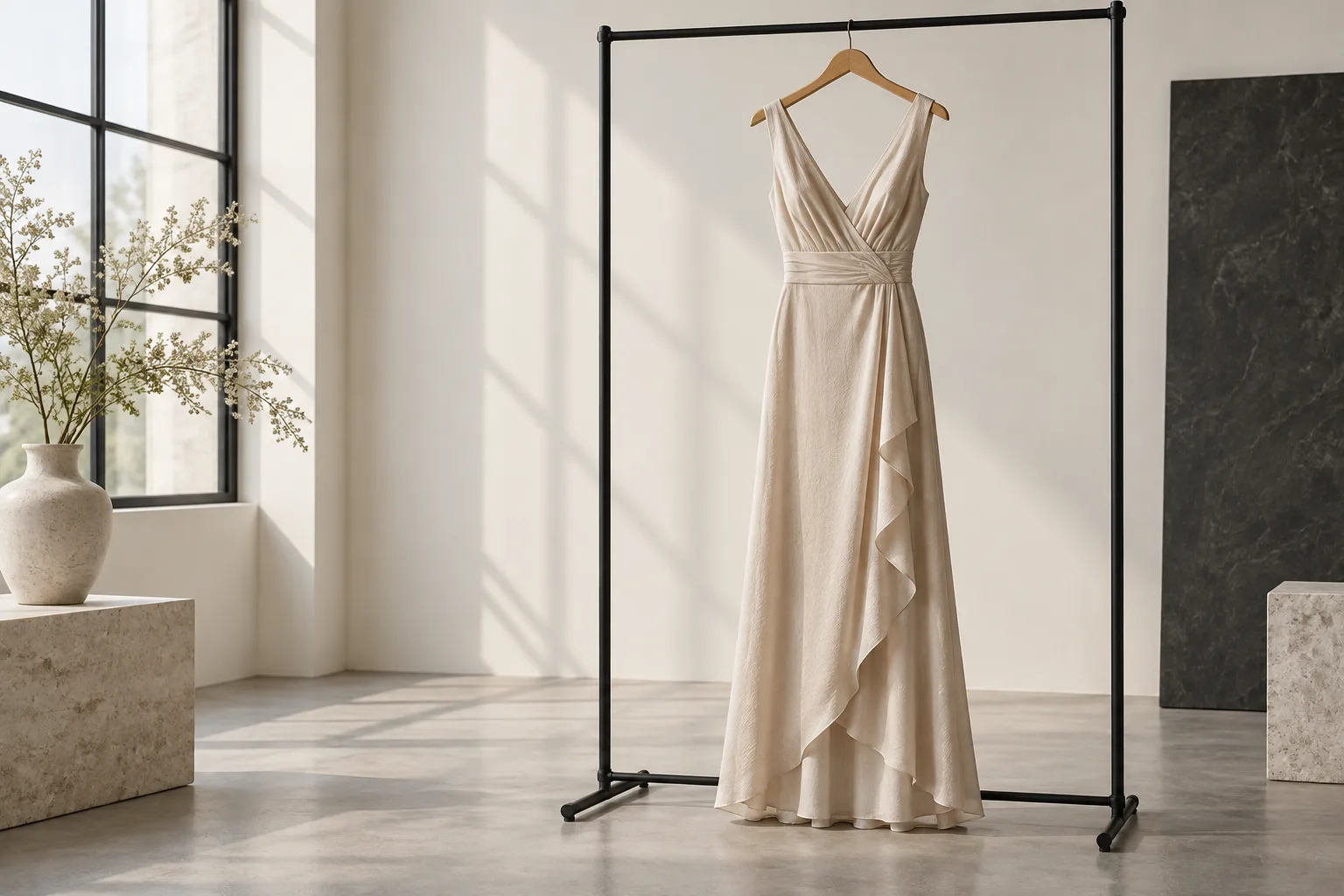
What elegant means in a useful wardrobe
The phrase “Stylewe elegant dresses” covers several different jobs: a wedding guest outfit, a dinner dress, an office-ready midi, a formal evening piece, or a polished option for travel. Those situations do not need the same neckline, hem, fabric, or support. Start by writing down the event, the expected temperature, how long you will wear the dress, and whether you will walk, sit, climb stairs, or carry a coat. A dress that looks refined while standing still still has to survive the actual day.
Elegance is usually a combination of proportion, restraint, and finish. A clean neckline, intentional waist placement, and fabric that hangs without pulling can do more than extra decoration. Product photography may emphasize a dramatic pose or a styled accessory, so separate the dress itself from the complete image. Check the cut, the measurements, the closure, and the care label before deciding that a piece will solve your occasionwear needs.
Choose the silhouette around movement
A sheath or column dress creates a controlled line and can work well for dinners, offices, and events where the dress code is polished but not theatrical. It needs enough ease through the hips and a slit or back vent when the stride is narrow. An A-line or fit-and-flare shape offers more room below the waist and may be easier for walking, sitting, and dancing. A wrap silhouette can provide adjustability, though the tie placement and coverage deserve careful inspection.
Length changes both movement and visual weight. A midi hem should land at a deliberate point on your calf, while a maxi should clear the floor with the shoes you will actually wear. A short dress may feel less formal, but a structured fabric and controlled neckline can keep it polished. Compare the listed garment length with a dress you already own rather than estimating from the model's height. That simple check catches many online fit errors.
Read the fabric and lining details
Fabric determines how the dress moves, photographs, breathes, and responds to care. Satin reflects light and can show pulling around the bust or hips. Chiffon creates movement but usually needs a lining. Jersey can be comfortable and packable while revealing seams or clinging to underlayers. A woven polyester blend may be easier to care for than a delicate fiber, but the hand and drape still depend on weight and construction. Read the fiber content instead of relying on a style adjective.
Lining is especially important for pale colors and fitted silhouettes. Check whether the lining extends through the bodice and skirt, whether it has enough ease to move independently, and whether the hem is shorter than the outer layer. A lining that catches on tights can change the entire fit. If the listing does not explain opacity, treat that as an open question and inspect customer photographs or retailer support information before ordering for a fixed-date event.
Treat support and neckline as separate decisions
A dress can fit through the waist and still fail at the neckline. Halter, one-shoulder, strapless, and low-back styles each change the support plan. Check whether the garment includes cups, a shelf, boning, a wide underband, or no internal support. If you need a convertible or adhesive solution, plan it before checkout and include it in the comfort test. A beautiful neckline is not useful if it requires constant adjustment or creates pressure after an hour.
Look for the points where the dress is likely to shift: armholes, shoulder seams, wrap edges, zipper panels, and the waist seam. Read return terms before trying on a dress with makeup, fragrance, or accessories. If you are between sizes, compare bust, waist, hip, and finished length separately. Alterations can refine a good starting fit, but they cannot always correct a neckline that is fundamentally too narrow or a bodice that lacks the required support.
Use the occasion to edit the styling
The dress should connect to shoes, outerwear, and accessories you already use. A simple dress can move from daytime to evening with a change of shoe and a structured layer. A heavily embellished piece may look complete on its own but give you fewer repeat-wear options. Consider the venue, the expected formality, and whether the event involves outdoor walking. A delicate hem or open shoe can be impractical when the route includes weather, gravel, or public transport.
Color should be judged against the wardrobe you own and the lighting of the venue. Black, navy, deep green, and restrained neutrals often work across several settings, while bright or highly reflective colors can be more event-specific. Prints need a scale that suits the dress silhouette; a small print can disappear in a full skirt, and a large print can dominate a close column. Build two or three outfits before you buy so the choice remains useful after the first invitation.
Check ordering, care, and return friction
Before ordering from any online retailer, confirm the current size chart, garment measurements, processing time, shipping estimate, and return conditions on the official product page. Read whether sale, made-to-order, or customized pieces have different terms. Save the listing details and order confirmation because colors, availability, and delivery estimates can change. If the event is close, allow time for trying on, exchanging, and making a minor alteration.
Follow the dress's care label rather than a generic internet rule. Heat, friction, and unsuitable detergents can damage satin, lace, coatings, elastic, and delicate trims. Store the dress with enough room to avoid hard folds, and keep jewelry or rough hardware away from the surface. The best choice from the Stylewe elegant dresses range is the one whose fit, occasion, care burden, and return path all match your actual life.


