Separate fabric names from surface appearance
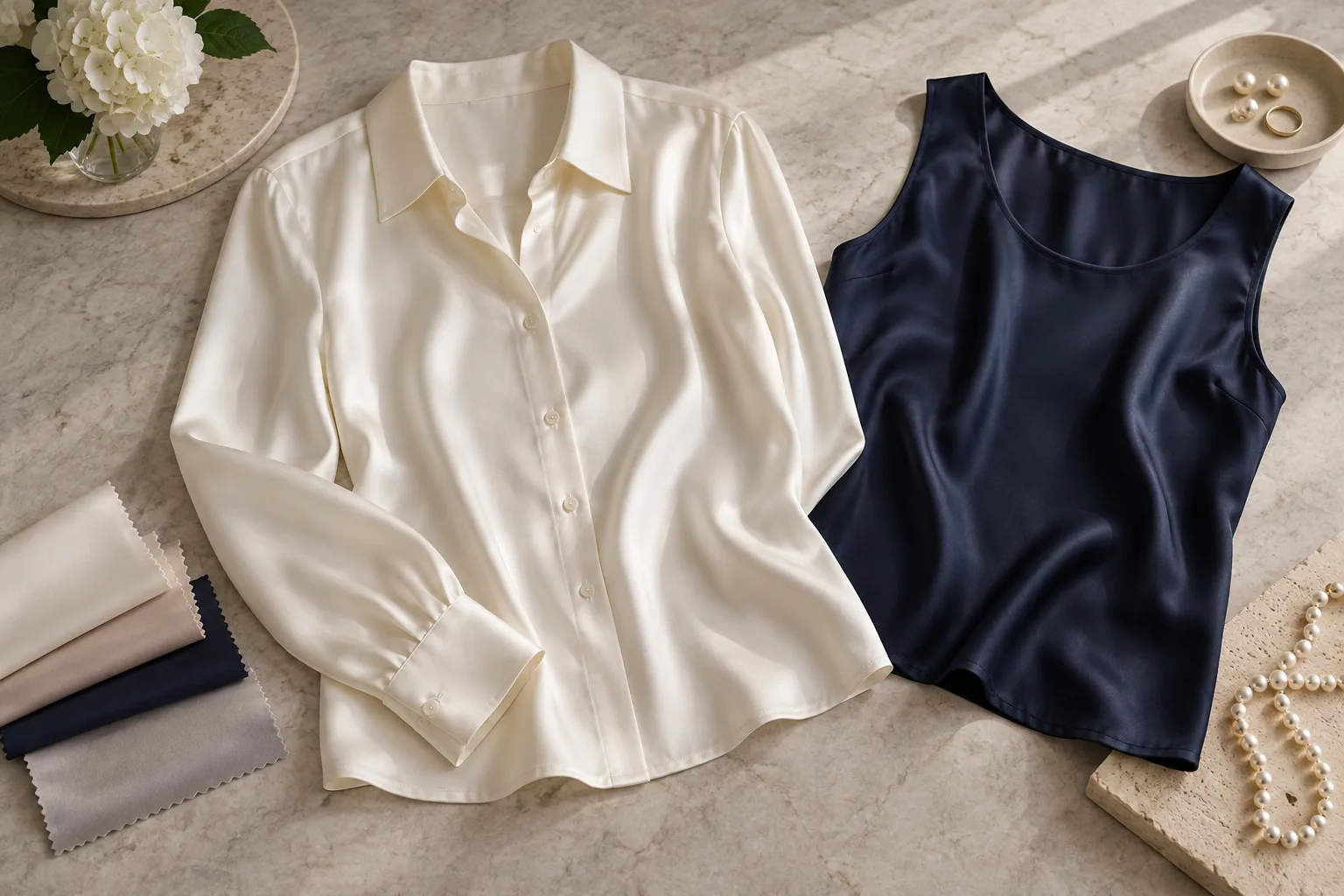
A glossy surface does not by itself establish that a top is silk. Satin describes a weave or finish rather than a fiber, and several fibers can be made into a satin-like fabric. Read the composition statement and distinguish silk from polyester satin, silk blends, and other smooth fabrics. The FTC’s textile labeling guidance is a useful reference for understanding why fiber content should be checked on the garment or full listing.
Then think about what you want the top to do. A silk shell may sit under a blazer, a button-front blouse may work for a desk or dinner, and a relaxed camp shirt may suit casual wear. Each shape creates different needs for opacity, movement, and laundering. Set the intended use first so the comparison does not collapse into a vague preference for shine.
Compare weave, weight, and opacity
Silk tops vary in weight and weave, so two garments with the same fiber name can feel quite different. A lightweight fabric drapes softly and can layer easily, but pale shades may show more through direct light. A denser weave can feel more substantial and hold a cleaner line, although it may be warmer. Check for lining, double layers, or an underlayer recommendation in the product details.
Product photography can conceal sheerness when the background and lighting are carefully controlled. Look for close-ups, side views, and customer photos taken in ordinary light. Consider where seams, darts, and pockets sit because those details can become visible through a light fabric. If you would need a specific camisole or bra to wear the top, include that in the total cost and decide whether the layering plan is comfortable.
Inspect cut and construction details
A blouse’s fit depends on more than bust circumference. Shoulder width, armhole depth, sleeve shape, and back ease affect whether you can reach forward or raise your arms. Compare garment measurements with a shirt that fits well, especially if the fabric has little stretch. A drop shoulder creates a relaxed line by design; a set-in sleeve should sit close to the shoulder edge without pulling.
Closures and seams tell you how the top will behave with repeated wear. Buttons should lie flat when the blouse is closed, and the placket should not gape across the chest. Check whether seams are finished cleanly and whether a hidden zipper has a comfortable backing. Decorative details such as ties or gathers can alter fit and may complicate pressing. A product image that shows the back and inside finish gives more useful evidence than a front-only studio shot.
Choose a neckline for the outfit you already wear
A crew or jewel neckline layers neatly under a jacket but may feel high in warm weather. A V-neck can create more open space around the face, while a collar gives a shirt-like structure. A camisole or shell can be easier under knitwear because it has fewer seams at the arm. Consider jewelry and bra straps before choosing an open or narrow neckline; a top that needs constant adjustment will see less use.
Sleeve length also changes how often the piece can be worn. Sleeveless styles can layer under a cardigan but may show more of the underarm seam. Long sleeves offer coverage and a more formal outline, yet can feel warm in a crowded room. Cuffs should close comfortably and allow the sleeve to be pushed back if needed. Select the feature that solves a recurring wardrobe problem rather than the one that looks most dramatic in isolation.
Build outfits around one polished layer
Silk and silk-like tops often have enough sheen to act as the focal point. Pair that finish with matte trousers, denim, or a simple skirt instead of adding several competing reflective accessories. A relaxed blouse can be tucked, half-tucked, or worn loose depending on length and side vents. Check whether the hem stays in place when tucked; a slippery fabric can work free during a normal day.
Color affects both versatility and care. Ivory and pale shades may require attention to cosmetics and underlayers. Navy, black, and deeper colors can be easier to style in evening outfits but may show lint. A print can disguise small creases while narrowing the combinations it works with. Match the top against clothes and shoes already in your closet and plan at least three outfits before deciding it deserves a place.
Be realistic about care and storage
Silk care varies by construction and finish. Follow the label’s exact directions for cleaning, water temperature, pressing, and drying; do not assume that all silk can be hand-washed or that dry cleaning is always required. The care instructions should be part of the purchase decision, not something to check after the return window closes. If professional cleaning is recommended, consider how often that cost will recur.
Store delicate tops on a smooth hanger or folded where the fabric will not be caught by rough hardware. Avoid hanging a very lightweight knit by its shoulders if the garment is likely to stretch under its own weight. Keep perfume, deodorant, and jewelry from abrading the surface. For wrinkles, use only the method and temperature allowed by the label. These small habits can matter more than an elaborate wardrobe plan.
Check the product details before ordering
Confirm the fiber percentages, finished measurements, lining, closure, care label, shipping estimate, and return rules for the exact item. If the page uses silk as a style descriptor but provides no fiber content, treat that as an unanswered question. Save the listing and order confirmation, and leave time to exchange a size if the fit is important for a planned occasion.
The strongest silk top purchase is a match between composition, construction, use, and care. A more affordable alternative may make sense if it provides the surface and drape you want with less upkeep; genuine silk may be worthwhile when its feel and characteristics solve a specific need. Decide on the evidence the retailer provides, then choose a top you can wear and maintain without special guesswork.