
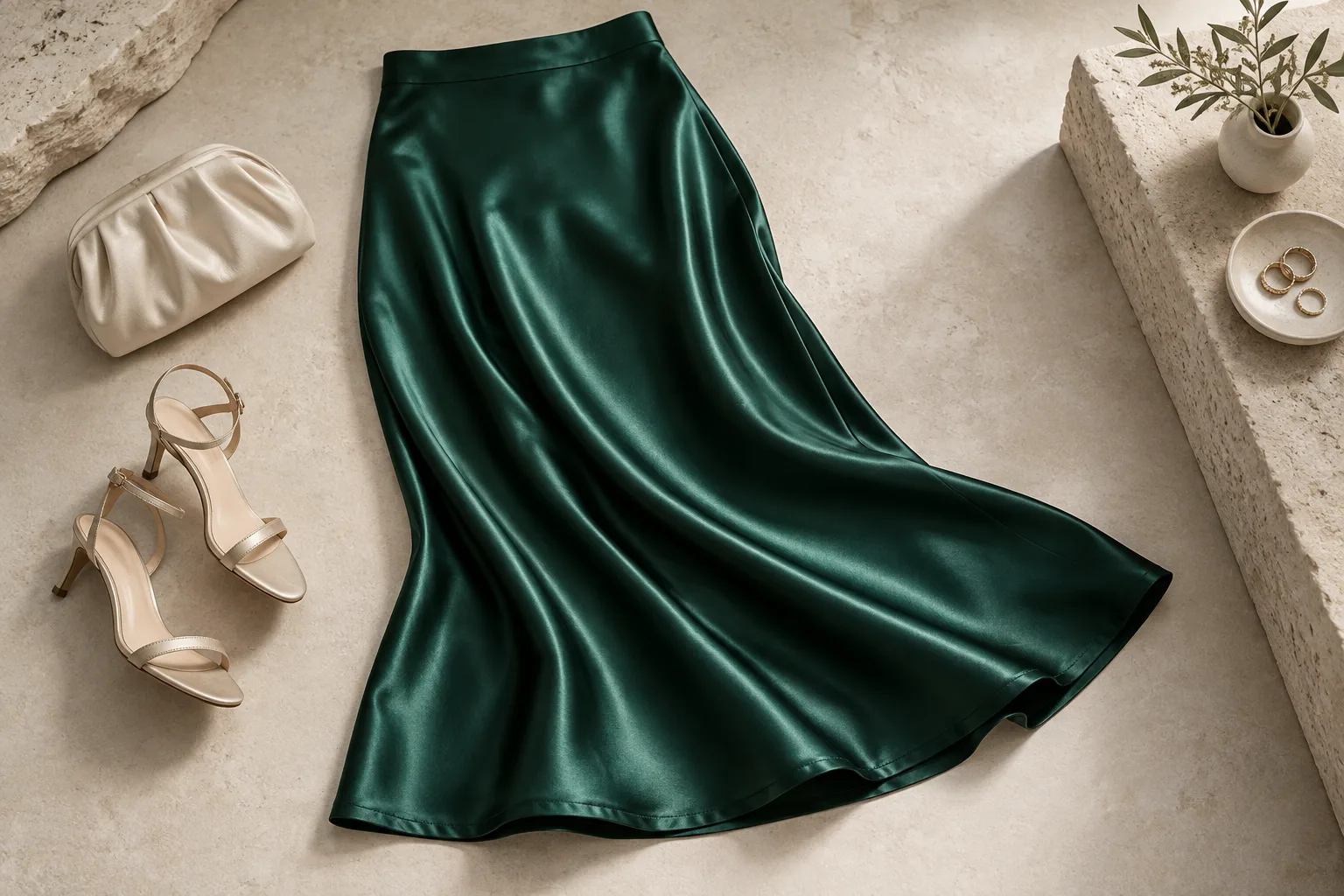
Define what you want the shine to do
Satin is a surface and weaving effect, not a guarantee of a particular fiber or level of quality. A satin skirt may be made from polyester, silk, acetate, viscose, or a blend, and each option behaves differently. Before shopping, decide whether the skirt is for a formal event, dinners, office layering, travel, or repeated weekend wear. A high-shine bias-cut skirt creates a different visual message from a matte satin A-line. The best choice begins with the setting and the outfits you need, not with the brightest listing image.
Shine also changes as the fabric bends. A smooth panel can reflect a clean highlight while a gathered or bias-cut skirt creates shifting folds. That effect is part of the appeal, though it can emphasize pulling across the hips or wrinkling at the waistband. Look at the skirt from several angles in customer photographs when available. You are evaluating how the surface behaves in motion, not just whether the color looks rich in a carefully lit studio.
Compare fiber, weight, and surface finish
Fiber content gives the first useful clue about feel, durability, and care. Polyester satin is often chosen for easier care and a consistent sheen. Silk satin can feel exceptionally smooth but may require more delicate handling. Viscose and acetate satins can drape beautifully while demanding attention to water, heat, and seam stability. Read the composition and care label together; a skirt that feels luxurious but cannot fit your routine may be poor value for everyday use.
Weight determines how much the skirt clings, swings, or shows the outline beneath it. Very light satin can be comfortable and fluid, yet it may reveal underlayers or catch static. A heavier satin can hang cleanly and look more formal but may feel warmer. Check whether the skirt includes a lining, what the lining is made from, and whether the outer fabric has enough recovery after being folded. A dense, even surface is easier to style than a fabric that looks patchy under changing light.
Treat the waistband as the anchor
A satin skirt needs a waistband that stays in place without creating a ridge visible through a fitted top. Flat elastic can be comfortable and discreet. A shaped waistband with a zipper may look more tailored but needs accurate measurements. A fully elastic waist is forgiving, though the gathers can add volume at the center. Examine how the waistband joins the skirt and whether the seam is reinforced, especially if the skirt is cut on the bias or has a heavy lining.
Use the product chart to compare waist, hip, and finished length with a skirt you own. Satin does not always forgive sizing mistakes because pulling changes the reflection and can make the garment look uneven. Check whether the fabric is described as stretch, then separate stretch in the waistband from stretch across the body. Sit in the skirt and walk several steps if you can try it on. If the waistband rolls or the side seam rotates, the issue will become more noticeable as the day progresses.
Choose cut and length for movement
The bias cut follows the body and creates a fluid line, but it can be less forgiving around the hips and more sensitive to hanging and storage. A straight or A-line cut gives a clearer structure and may be easier to wear with tucked tops. Pleats can add movement, while a slit can make a narrow skirt practical on stairs. The right silhouette depends on your stride and the shoes you will use, so pay attention to movement before deciding that one cut is universally flattering.
Midi lengths are versatile when the hem lands at a deliberate point and does not compete with the shoe. A maxi needs enough clearance from the ground and should not twist around the ankles. A shorter satin skirt can work for evening or casual outfits when the lining and closure are secure. Measure the finished length, note the model's height only as context, and check whether the garment can be altered without disrupting the cut or hem finish.
Control static, cling, and visible underlayers
Static is a practical issue with many smooth synthetic fabrics. It can make the skirt cling to tights, legs, or the lining and change the intended drape. Look for a lining that moves smoothly and for enough ease through the body. The product page may not describe static performance, so customer photographs and return terms matter. Avoid assuming that a heavier sheen means better control; surface appearance and electrostatic behavior are different questions.
Underlayers should support the line without creating a second outline. Choose the color and texture with the skirt's opacity in mind, and check how the waistband of your undergarment sits beneath the satin. Pockets can be useful but may show through a close cut. If the fabric is pale or cut on the bias, perform a daylight check before wearing it to an important event. A lining can improve confidence, but only if it does not pull or bunch when you walk.
Style satin with materials that add balance
Satin becomes easier to wear when the rest of the outfit gives its shine a context. A cotton tee, denim jacket, or textured knit can make a glossy skirt feel less formal. A crisp shirt, fine cardigan, or tailored blazer can move it toward evening or work-appropriate dressing where the setting allows. Match the volume of the top to the skirt rather than layering shine on shine. One reflective surface is often enough to create focus.
Shoes change the message quickly. Sneakers and flat sandals emphasize ease, loafers add structure, and a simple heel leans toward occasion dressing. Use the shoes you already own as the first test. If the skirt requires a special shoe, special underlayer, and special outer layer, it may remain an event piece even if the product description calls it versatile. Versatility is proven by the number of real outfits you can make, not by a broad color range.
Care, storage, and a sensible purchase decision
Follow the garment's care label for washing, drying, ironing, and professional cleaning. Satin surfaces can show water marks, pressure shine, snags, and heat damage, so a shortcut that works on a cotton skirt may not be appropriate here. Store the skirt with enough room to avoid sharp folds and keep rough accessories away from the surface. If the label recommends hanging, use a hanger that supports the waistband without leaving marks.
Before ordering, verify fiber content, lining, waistband construction, hip and length measurements, slit placement, pocket design, care, and return conditions. A good satin skirt should create a clean line when standing, remain comfortable while sitting, and retain enough movement for the occasion. Choose the level of shine and care burden you are willing to maintain. That produces a skirt you can wear repeatedly instead of a beautiful piece reserved for a single photograph.


