Measure the room before browsing finishes
A round coffee table can make movement around a seating group feel less abrupt, but the wrong diameter still blocks a path. Measure the space from the front edge of the sofa to the other seating, then mark the intended table footprint on the rug with paper or painter’s tape. Walk around that outline and open nearby doors or drawers. This simple test reveals whether the table will fit the room’s actual circulation.
Account for the room beyond the seating cluster. A table can look proportionate from the sofa and still interfere with a walkway or the opening of a cabinet. Measure the full route people use to cross the room and consider where cups, books, remotes, or a tray will sit. Choosing a smaller diameter can be a better decision than squeezing in a larger top that reduces usable floor space.
Relate diameter and height to the sofa
Compare the table height with the sofa seat and arm height. A top that sits noticeably high can interrupt sightlines and make reaching feel awkward; a very low table may be difficult to use from a deep sofa. The ideal relationship depends on the seat depth and how people use the room. Measure the furniture instead of relying on a general rule that ignores your particular cushions and posture.
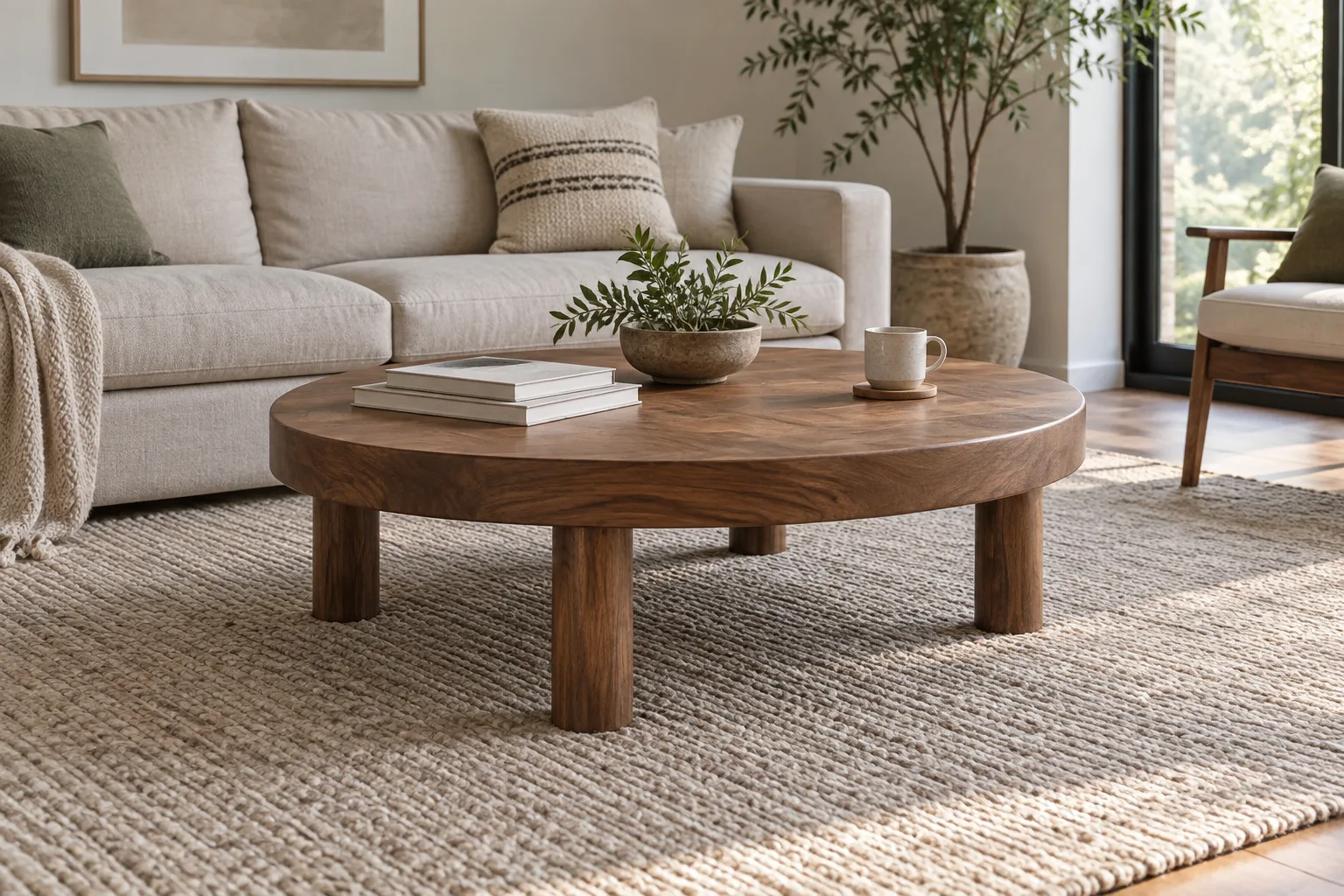
Diameter should provide usable surface without dominating the seating area. A small round top may work well beside a compact loveseat or sectional corner; a larger top can anchor a wider sofa and more seats. Consider how many people need to reach the table at once. Leave enough space around the edge for knees and feet, especially if the table has a thick apron or legs that angle outward.
Choose a base and edge that suit movement
Pedestal bases create open floor space around the perimeter, while four legs can feel visually lighter but may occupy more footroom. A cross base or sculptural support changes where chairs or feet can pass. Look at the underside and leg layout, not just the top surface. If the table is used with a sectional, check that the base does not conflict with the chaise or the common route around it.
The edge profile affects both appearance and daily use. A rounded edge may feel softer in a small room; a crisp edge gives a more defined line. The shape does not guarantee child safety, so consider the household’s needs and use appropriate supervision and furniture placement. Check whether the finish is even around the edge and whether the tabletop is thick enough to feel stable without making the whole piece visually heavy.
Compare wood, glass, and mixed materials
Wood brings visible grain and a substantial feel, but species, veneer, finish, and construction can vary widely. Ask whether the top is solid wood, veneer, or a composite with a wood-look surface. These materials have different care and repair considerations. A glass top can make a compact room feel more open but needs regular cleaning and may show fingerprints. Stone or metal adds weight and a different surface temperature.
Match maintenance to use. A family room where drinks and snacks are common may need a surface that tolerates routine wiping and occasional spills. A delicate finish can still work if coasters and careful handling are normal in the household. Read the manufacturer’s cleaning instructions before purchase. If the table will sit in direct sunlight or near a heat source, ask how the material and finish respond to those conditions.
Decide whether storage is genuinely useful
A shelf or drawer can reduce clutter, but storage changes access and legroom. A lower shelf is convenient for books and baskets; a drawer hides small items but needs clearance to open. Check the drawer’s depth and the direction it pulls. If the room is already crowded, a storage table can become a visual block even when it organizes the surface.
Think about what will live there. Remotes, coasters, and a small notebook need different storage from bulky blankets or games. Open shelves keep items visible and easy to reach; closed storage creates a cleaner surface but can add weight. If the top is small, an extra shelf may be more valuable than a larger decorative object. Choose storage for a specific routine rather than treating it as an automatic benefit.
Check delivery, assembly, and stability
Confirm the packaged dimensions, delivery method, assembly requirements, and doorway clearance before ordering. A round tabletop can still arrive in a large carton, and stair turns can be more restrictive than an entry door. Check whether assembly requires two people or tools that are not included. Read the retailer’s damage and return process because a heavy item can be difficult to repack.
After assembly, place the table on a level surface and check whether it rocks. Tighten hardware according to the manufacturer’s directions and avoid over-tightening fasteners. Keep loads within any published limits and do not use the table as a step or seat. If the piece has a tip-over hazard in the intended home, follow relevant CPSC furniture-safety guidance and the manufacturer’s instructions.
Choose the table that fits the living pattern
A round table is a strong choice when its outline improves the path through the room, the height works from the sofa, and the top supports the activities that happen there. Compare the taped footprint with your current layout and test the walkways at the busiest points. Then choose a material and finish that suit the household’s cleaning routine.
Before checkout, verify dimensions, base placement, construction, finish, assembly, delivery, and return terms. Save the product details and inspect the table promptly after delivery. The most useful round coffee table is neither the largest nor the most decorative option; it is the one that supports the seating area without taking over the room.