Begin with the way a loafer holds your foot
A penny loafer slips on without laces, so the instep and heel do much of the work of keeping it secure. The shoe should feel snug enough to stay in place without pressing painfully across the top of the foot. Check the instep and heel together rather than sizing only by toe length. A loose heel can cause friction; a tight vamp can make the shoe difficult to wear for more than a short try-on.
Try the shoe indoors on a clean floor with the socks or hosiery you expect to wear. Walk, turn, and flex the foot. The toe box should allow natural movement, while the heel should not lift excessively on each step. Leather may soften with wear, but do not assume a painful pressure point will disappear. The initial fit should be comfortable enough that any break-in is minor rather than a plan to endure discomfort.
Look at the vamp, saddle, and opening
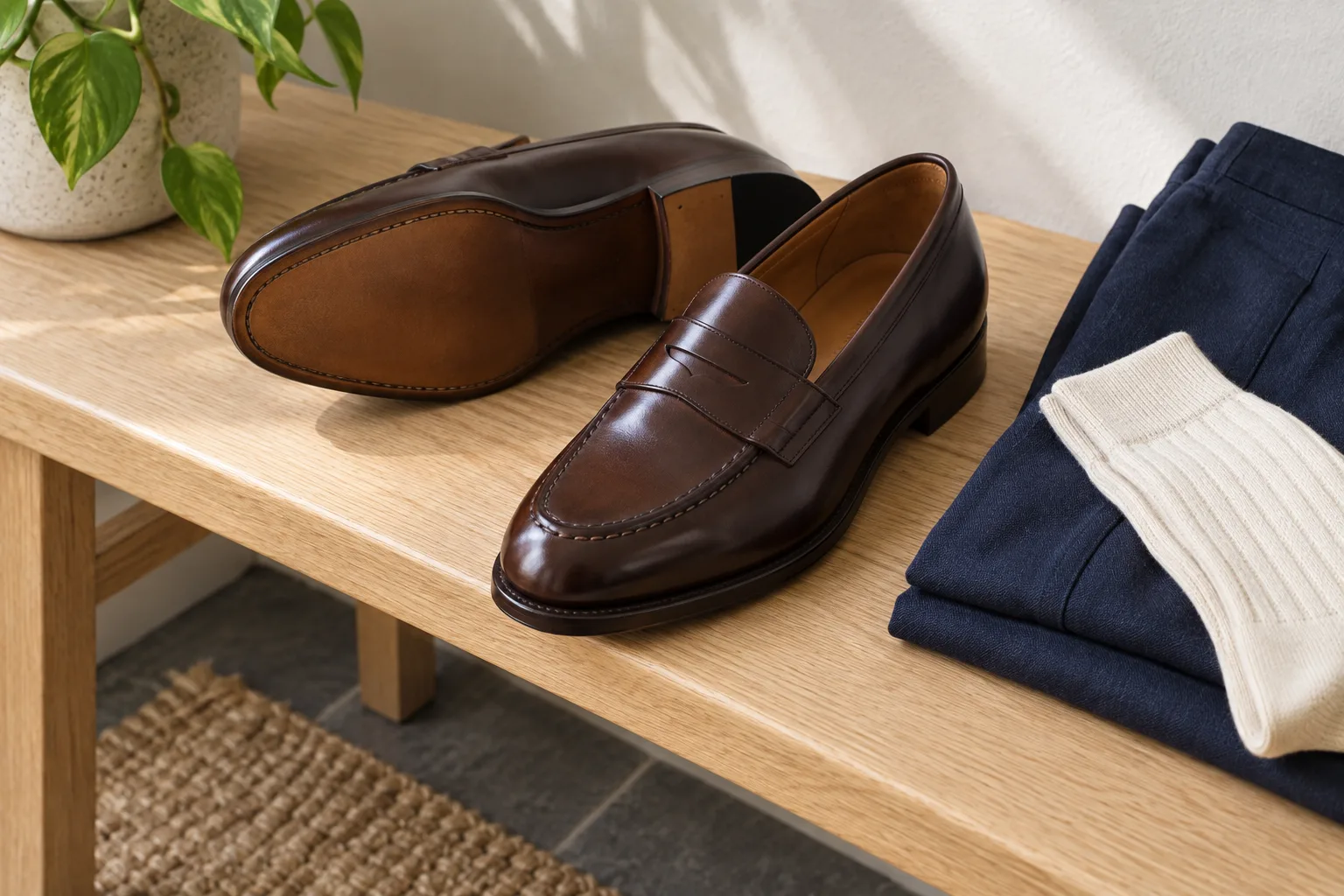
The vamp is the front section that covers the top of the foot; its height and shape affect both appearance and pressure. A higher vamp can feel secure on some feet and restrictive on others. The saddle detail is a visual hallmark of the penny loafer, but it should lie flat and not create a sharp edge. Inspect the opening for binding or stitching that might rub during movement.
Compare the profile from the side and above. A rounded toe often reads casual, while a narrower toe can look more formal but may leave less room. A low-cut opening shows more of the instep and can change the fit. Product photography should include an overhead view if possible. If the shape is unclear, use the retailer’s size and return information before placing an order.
Compare material claims and finishes
Brown loafers may use leather, suede, synthetic materials, or combinations. The product description should identify the material accurately; the FTC’s leather guidance addresses claims about leather and imitation-leather products. A smooth finish is often easier to wipe clean, while suede has a nap that can change shade when brushed. Neither surface is maintenance-free, so compare the care instructions with your routine.
Brown shades are not standardized. Cognac, chestnut, dark brown, and espresso can look quite different under warm or cool lighting. Check images from multiple angles and compare the shoe with trousers or skirts you already own. A polished finish may feel dressier, while matte leather or suede can soften an outfit. Color versatility depends on your wardrobe, not on a label’s claim that a shade is universal.
Assess the sole and underfoot feel
Sole construction changes flexibility, weight, and the feel of the shoe on hard surfaces. A thin sole can look streamlined but offer less separation from the ground. A thicker rubber sole can feel more substantial and may suit longer walking, while adding visual weight. Look for clear product details and inspect the sole edge in images. Avoid interpreting a decorative tread pattern as proof of traction in every condition.
Walk on the surfaces where you expect to wear the loafers. Indoor floors, sidewalks, and wet paths place different demands on the shoe. Check whether the forefoot flexes naturally and whether the sole feels stable when turning. If the shoe has a stacked heel, confirm that it does not change your stride. A loafer chosen for commuting should be tested around a block’s worth of movement indoors before tags are removed.
Make the styling fit your wardrobe
Brown penny loafers pair naturally with tailored trousers, denim, and some skirts, but the shade and shape determine the outfit’s tone. A dark polished loafer can anchor a work outfit; a lighter brown or suede version may feel more relaxed. Hem length matters: trousers that break heavily over the vamp can hide the shoe, while a cropped hem exposes more of it. Try combinations with the clothes already in rotation.
Socks alter both comfort and appearance. No-show socks can keep the shoe visually open but may slip inside the loafer. Thin dress socks add coverage and can reduce friction; thicker socks require more volume in the shoe. Select the sock before sizing if it is part of your regular wear. A stylish outfit is less useful if the shoe rubs because the planned sock was ignored.
Use a careful break-in and care plan
Start with short indoor wear and increase the time only if the shoe stays comfortable. Check for rubbing at the heel, pressure over the instep, and toe contact. Do not use aggressive stretching methods unless the manufacturer approves them. If the fit remains uncomfortable, use the retailer’s return window. A shoe that needs substantial force to become wearable may be the wrong size or shape.
Follow the care directions for the exact material. Leather, suede, and synthetic finishes need different cleaners and protectants. Keep the loafers away from direct heat while drying and store them so their shape is supported without stretching the opening. If the product claims a particular material, keep the listing and label details for reference. Regular light care is easier than correcting a stain or cracked finish later.
Make the final choice
Before checkout, verify the material, size chart, width options, sole details, delivery estimate, and return policy. Check whether discounted pairs can be returned and whether return shipping is charged. Try the shoes on a clean indoor surface with the intended socks. Keep the box until the fit and finish are confirmed, especially if the loafers are for a specific event.
Brown penny loafers can become a useful repeat-wear shoe when their instep, heel, sole, and color all work for your day. Choose the pair that stays secure without painful pressure and fits more than one outfit. The saddle detail and polished surface are only part of the decision; comfort over an ordinary route is the test that determines whether they stay in use.