
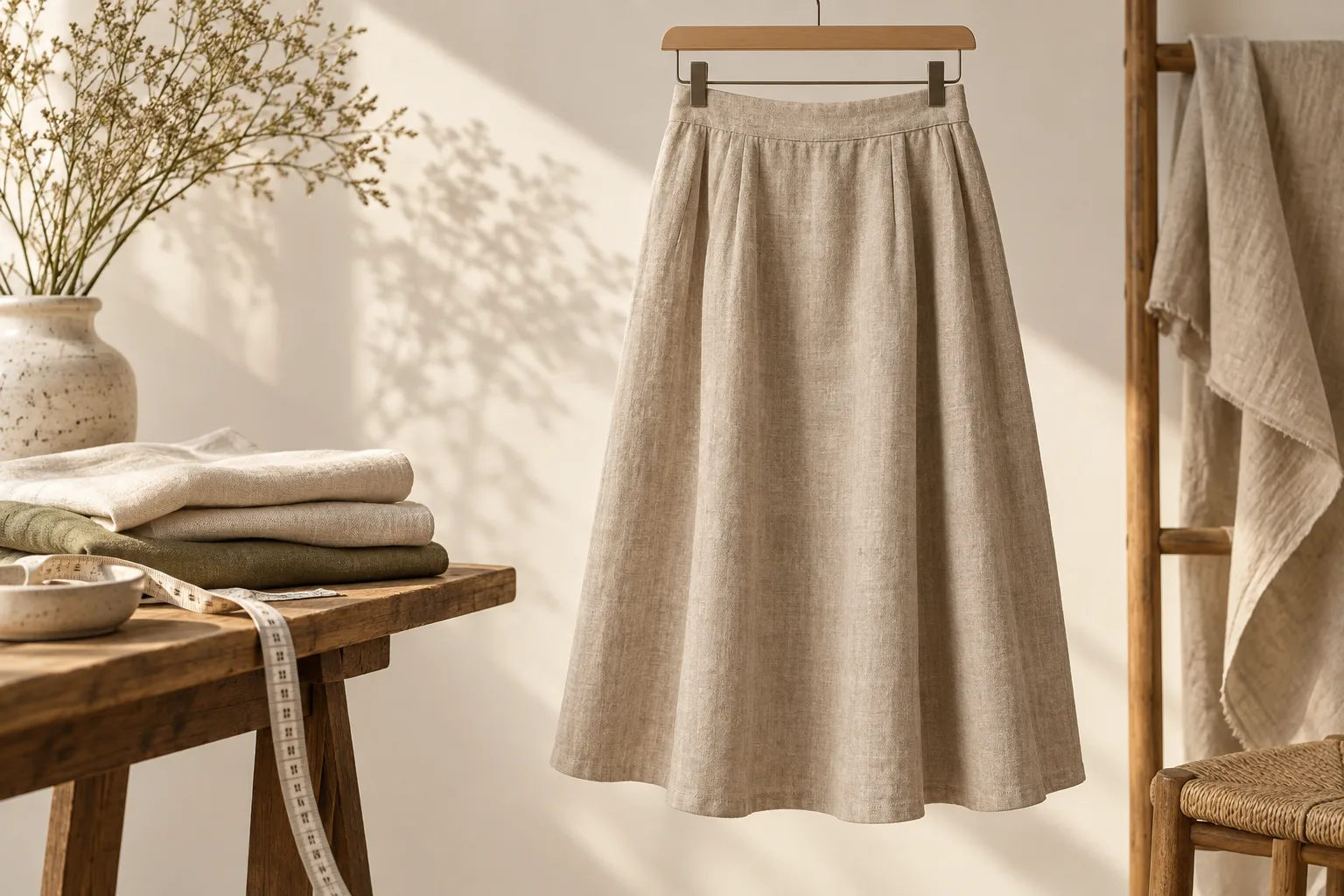
Start with the role the linen skirt must play
A linen skirt earns its place in a wardrobe when it solves a recurring warm-weather problem. You may want an easy piece for errands, a polished option for an office with relaxed dress codes, a travel skirt that can be worn more than once, or a breathable layer for weekends. Those jobs lead to different choices. A full, unlined maxi skirt can be comfortable at a beach but cumbersome on a crowded commute. A narrow midi can look refined and still feel restrictive if the slit, hem, or waistband does not support your normal stride.
Write down the situations you expect to repeat before comparing colors or decorative details. Think about the shoes you already wear, how often you sit, whether you carry a phone and keys, and how much time you will give to pressing or steaming. Linen has a relaxed visual language, so a small amount of creasing is expected. The useful question is whether the garment keeps an intentional shape after movement, not whether it stays perfectly smooth like a synthetic formal fabric.
Read the fiber content and weave together
The word linen describes a fiber, while the finished skirt depends on the yarn, weave, weight, and any blended fibers. A linen-cotton blend can feel slightly softer and may hold a crisper line. Linen-viscose blends often drape more fluidly. A high-linen fabric can have a pronounced slub and a dry hand that suits casual dressing. None of these is automatically better. The right construction depends on whether you value structure, softness, airflow, or a smoother surface.
Look for a description that explains the actual composition rather than relying on a product title. A loose weave may feel light but allow more light through, while a denser weave can give the skirt better coverage and shape. If the listing provides fabric weight, compare similar garments by that number. When it does not, use close-up images, lining information, customer photographs, and the stated care method as clues. A skirt with a beautiful texture still needs enough stability for the setting where you will wear it.
Fit the waistband to sitting, walking, and eating
The waistband is the first fit point to test because it stays in contact with you all day. A flat front with elastic at the back can balance a clean appearance with flexibility. A fully elastic waist may be comfortable for travel, while a shaped waistband can look more tailored with a tucked shirt. Drawstrings offer adjustment but bring a casual detail that may not suit every outfit. Check the rise and finished waist measurement, not only the nominal size.
Measure a skirt that already fits you well from the top of the waistband to the hem and compare it with the product chart. Then check how the waistband will behave when you sit. A close waistband can feel fine while standing and press into the stomach at a desk. A loose waistband may require constant adjustment when the skirt is full or when pockets carry weight. If the garment has a side or back zipper, inspect whether the closure lies flat and whether the seam allows enough hip ease.
Solve opacity before choosing a pale color
Light linen is attractive because it makes the weave visible, but pale colors need a deliberate opacity check. Hold the skirt mentally against strong daylight and look for pocket bags, seam shadows, and the outline of underlayers. A lining can improve coverage and help the skirt hang smoothly, though it adds weight and can reduce the cooling effect of the fabric. An unlined skirt may be excellent when the weave is dense enough and the color is forgiving.
The lining length matters as much as its existence. A lining that stops well above the outer hem can create an unexpected line when you walk. A lining that is too narrow can pull across the hips. Check whether the pockets are lined and whether the lining is made from a fabric that will cling in humidity. If coverage is important, treat product photographs under studio lighting as incomplete evidence and look for customer images or a clear return policy before ordering.
Choose length and volume around your shoes
A linen skirt changes character with its hem. A mini can feel light and easy with flat sandals, while a midi often moves between sneakers, loafers, and low heels. A maxi creates more visual drama and sun coverage but needs a hem that will not sweep the ground or catch on stairs. Measure the finished length from the waistband and compare it with your actual shoes. Model height is useful context, but it cannot predict where the hem will land on your body.
Volume also affects mobility. An A-line or gently gathered skirt leaves room for walking without the bulk of a full circle. Pleats can add movement, though they need enough fabric recovery to keep their shape. A straight skirt may need a back or side slit for a natural stride. Walk, sit, climb a step, and turn before removing tags. These simple movements reveal more about a linen skirt than a static mirror check.
Build outfits from texture and proportion
Linen already contributes texture, so the easiest outfits pair it with one clear counterpoint. A smooth cotton tee can keep a casual skirt relaxed. A fine knit or crisp shirt can give a more structured midi enough contrast for work or dinner. If the skirt is wide and high-waisted, a tucked or shorter top can show the waist and prevent the outfit from becoming a column of fabric. Longer layers can work when their hem has enough structure to balance the skirt.
Color should be tested against your existing wardrobe rather than against a mood board. Natural flax, white, navy, black, olive, and muted stripes each behave differently with shoes and outer layers. A pale skirt may need more attention to underlayers and cleaning. Dark linen can bridge casual and polished outfits but may show lint or fading. A practical choice connects to at least three tops, two pairs of shoes, and one layer you already own.
Let care and creasing decide the final value
Read the care label before ordering because linen skirts can differ substantially in washing, drying, and pressing requirements. Some are designed for gentle machine washing; others require a more controlled routine or professional care. Follow the item-specific instructions, especially when the skirt includes a lining, dark dye, embroidery, or a shaped waistband. Natural creasing is expected, but repeated high heat or unsuitable drying can change the hand and dimensions of the fabric.
The final test is repeatability. Can you wear the skirt for a full day, clean it within your normal routine, and put it back into rotation without a special project? Check pocket capacity, closure quality, return terms, and whether the hem can be altered if needed. The best linen skirt combines a breathable fabric with a stable fit, useful length, honest opacity, and care requirements you will actually follow.


