Choose the role before choosing the shade
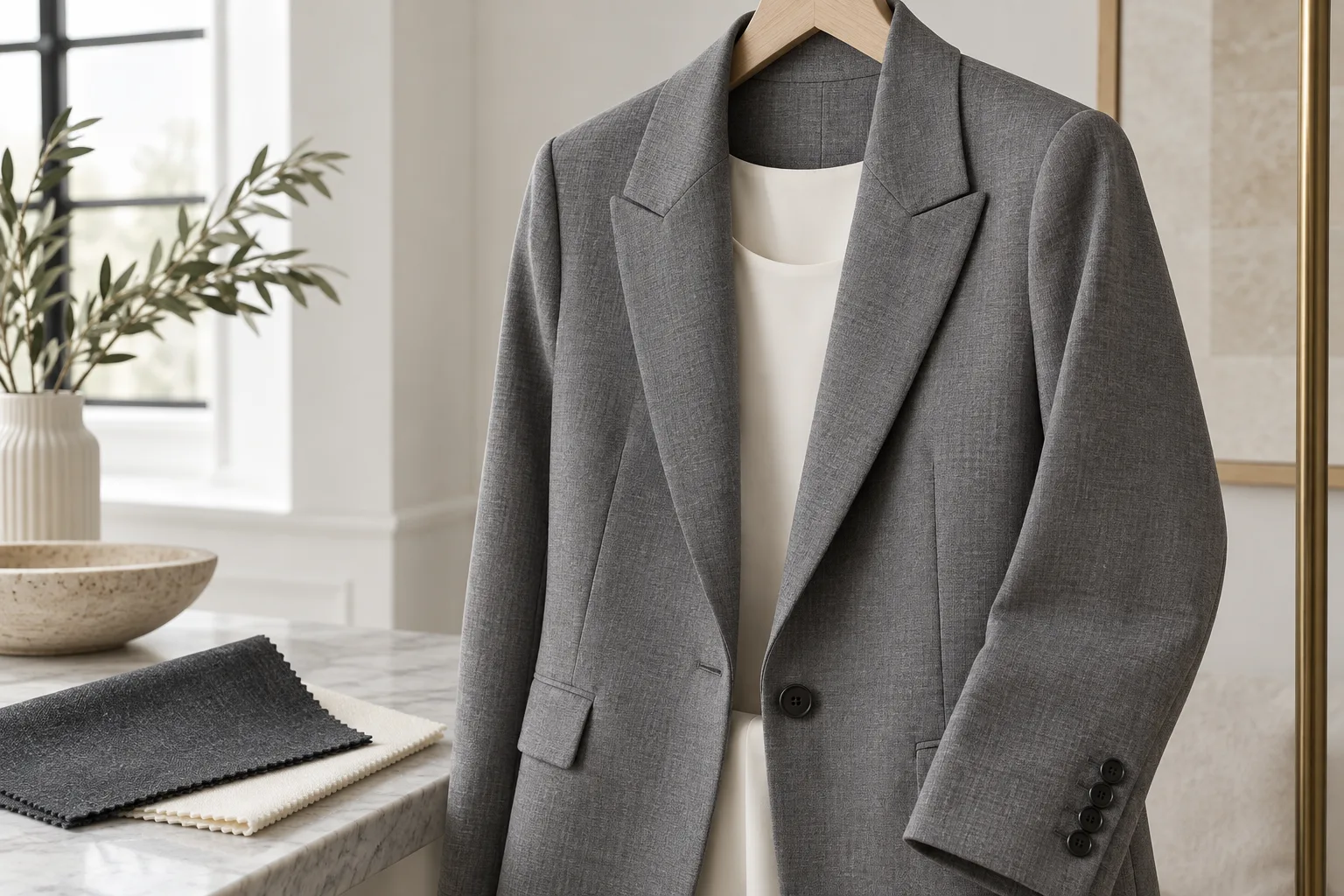
A gray blazer can be a work layer, a travel jacket, or a way to make jeans and a simple top feel more deliberate. Those roles call for different levels of structure. A lightly lined knit blazer is easier to pack and may feel relaxed; a woven jacket with shaped shoulders can look more formal and hold a cleaner outline. Decide which use will happen most often before comparing product photos.
Consider the tops and bottoms you already own. A blazer earns repeat wear when it connects to several outfits, not when it matches only one carefully staged look. List a few shirts, trousers, skirts, or dresses that would work beneath it. If the jacket requires a new pair of shoes or a specific trouser color, include that extra cost in the decision.
Read the undertone in gray
Gray ranges from cool charcoal and blue-gray to warm taupe-gray. The undertone can change how the blazer works beside navy, black, cream, brown, or denim. A cool gray may create a crisp contrast with warm neutrals; a warmer gray can sit more naturally beside camel and olive. Look at the garment in several product images because studio lighting can make a single shade appear warmer or cooler.
Think about contrast as well as color. A pale gray jacket may feel soft and casual, while charcoal can replace black in a more restrained outfit. Mid-gray often offers a balance, though the texture and finish still influence formality. Compare the jacket to clothing in your wardrobe under daylight if possible. Color names are broad descriptions, not guarantees that two garments will coordinate exactly.
Check shoulders, closure, and layering ease
Shoulder construction determines much of a blazer’s line. A set-in shoulder should sit close to the shoulder edge without pulling; a softer or dropped shoulder is relaxed by design. Compare the shoulder measurement with a jacket that fits as intended. Then test the upper arm and chest over the top you expect to wear. A blazer that fits over a thin tee may become tight over a blouse or light sweater.
Fasten the jacket and look for pulling across the button, diagonal folds, or lapels that lift away from the chest. These can indicate that the size or cut is too close. If you usually wear a blazer open, check its shape both open and closed. A single-button style creates a different balance from a double-breasted front, and the button position can change how long or short the torso appears.
Compare length and sleeve proportions
Jacket length affects how it works with dresses, skirts, and trousers. A cropped blazer can emphasize the waist and pair with higher rises; a longer cut creates more coverage and can make a simple outfit feel tailored. Compare the finished length with a jacket you already own. Look at the side and back views to see whether the hem lands at a useful point and whether vents allow the fabric to move.
Sleeves should allow normal arm movement and work with your preferred cuffs. A sleeve that reaches the wrist bone may suit a classic fit, while a shorter sleeve can show a shirt cuff or bracelet. Check whether the cuff buttons are functional and whether tailoring would be possible. Sleeve shortening is often easier than changing the shoulder, so do not accept a restrictive upper arm just to get the preferred sleeve length.
Select fabric for climate and routine
Wool blends, cotton, linen blends, and synthetic fabrics each bring different weight, drape, and care requirements. Fiber content alone does not determine quality. Look at lining, weave, stretch, and the garment’s stated use. A heavier blazer may keep its shape and work in cooler months but feel too warm indoors. A lighter unlined version can be more comfortable in transitional weather yet wrinkle more easily during travel.
Read the care label before treating the blazer as an everyday uniform. If it needs professional cleaning, consider how often you expect to wear it and whether that routine is practical. A washable style may be more convenient, but only follow the exact instructions for the garment. The FTC explains apparel fiber disclosures and care-labeling requirements; the product’s own label remains the guide for its maintenance.
Build outfits around the blazer
Try the blazer with at least three combinations: a work outfit, a casual outfit, and a layer over a dress or knit. Gray can bridge different colors, but different fabrics may make the outfit feel mismatched. Pairing a textured blazer with a smooth shirt gives contrast without adding more pattern. If the jacket is oversized, balance its volume with a more defined bottom; if it is fitted, a relaxed trouser can prevent the outfit from feeling rigid.
Shoes influence the jacket’s tone. Loafers or low heels can make it office-ready, while sneakers can shift it toward everyday wear. A belt or simple jewelry can refine the outfit, but the blazer should not need several accessories to feel complete. Consider how it works with your coat and bag too. A jacket that layers smoothly under outerwear will see more use across seasons.
Make the final fit decision
Before ordering, confirm chest, shoulder, sleeve, length, lining, fabric, delivery, and return details. Compare measurements to a garment with a similar shape, not just any jacket in your closet. Check whether discounted or final-sale items have separate terms. If the blazer is for a specific work date or event, leave enough time to try it on and make a simple alteration.
The right gray blazer for women is determined by fit and wardrobe use more than by a trend name. Choose a shade that works with existing clothes, enough room for the layers you actually wear, and a care routine you can keep. If it completes several outfits and feels comfortable when fastened and open, it is more likely to earn the space it takes.