Why formal dresses short with sleeves have become the modern evening benchmark
For decades, formal evening wear was virtually synonymous with floor-sweeping ballgowns and strapless bodices. However, changing social conventions, multi-venue celebrations, and international destination events have propelled formal dresses short with sleeves into the spotlight as an exceptionally versatile wardrobe asset. Modern hostesses, wedding guests, charity gala attendees, and corporate honorees increasingly prefer shorter hemlines that grant unencumbered footwork on dance floors, city streets, and historic staircases. When paired with sleeves, a knee-length or midi dress immediately commands respect, eliminating the vulnerability or constant adjustment that often plagues strapless gowns.
Choosing formal dresses short with sleeves allows the wearer to achieve an elevated aesthetic without sacrificing functional comfort. The inclusion of sleeves frames the collarbone, defines the shoulder line, and provides intentional arm coverage suitable for climate-controlled auditoriums, brisk autumn garden ceremonies, or conservative religious venues. Unlike full-length gowns that frequently require costly custom alterations and pick up grime from ballroom floors, well-tailored knee-length silhouettes remain pristine throughout long evenings and can easily be packed without excessive wrinkling.
To curate an evening look that feels truly refined rather than casual, one must inspect how the abbreviated skirt length interacts with bodice proportions. In the world of high-tier eveningwear, shorter silhouettes must compensate for lack of sweeping yardage by displaying superior textile quality, thoughtful darting, and meticulous finishing. Whether attending an intimate city hall ceremony or an upscale evening fundraiser, understanding the nuances of formal dresses short with sleeves ensures you select a piece that radiates timeless polish and photographic presence.
Deconstructing sleeve variations: cap, elbow, three-quarter, and illusion cuffs
The sleeve style of formal dresses short with sleeves sets the overall tone of the garment and determines its seasonal viability. A cap sleeve provides minimal coverage over the shoulder cap, adding structural width to balance broader hips while keeping the underarm completely open for warm summer galas. While light and breezy, cap sleeves require precise armhole tailoring to prevent pinching against the anterior deltoid during repetitive motions like raising a glass or greeting colleagues.
Elbow-length and bracelet three-quarter sleeves represent the most universally flattering options for evening cocktail attire. Ending precisely at or just below the elbow crook, three-quarter sleeves draw visual attention to the narrowest portion of the natural waist and wrist, creating an inherently slender profile. This length also leaves ample wrist space to showcase heirloom bracelets, luxury timepieces, or opera gloves, bridging the gap between conservative modesty and artistic evening glamour.
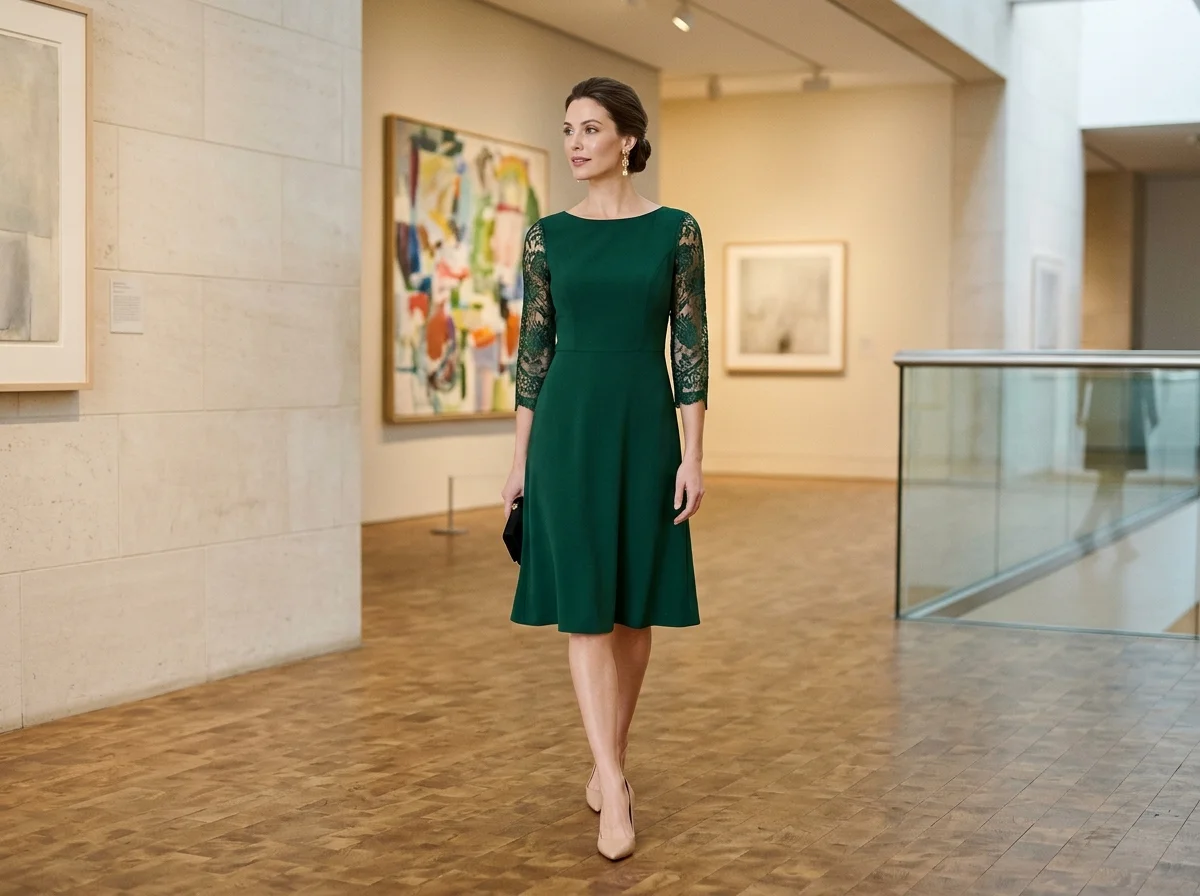
Illusion sleeves—crafted from fine mesh, chantilly lace, or Swiss dot tulle—offer another sophisticated dimension for formal dresses short with sleeves. By employing semi-sheer textiles, designers bestow the aesthetic poise and coverage of long sleeves while preserving visual lightness and thermal breathability. When evaluating illusion designs, examine whether the underarm seam contains reinforced binding; fragile tulle can quickly tear under friction if raw seam allowances are left exposed to movement.
Full-length sleeves on abbreviated evening silhouettes generate striking architectural drama. A high jewel-neck bodice framed by slim, full-length jersey or crepe sleeves creates a bold contrast against a leg-baring knee-length pencil skirt. If selecting full sleeves, prioritize fabrics with high dimensional recovery, such as stretch crepe or micro-knit blends, so the elbows do not bag out after an hour of seated dinner conversation.
Evaluating evening textiles: crepe, jacquard, bonded lace, and silk blends
The fabric composition of formal dresses short with sleeves dictates how the garment holds its silhouette, reflects venue lighting, and resists seated creasing. Lightweight casual fabrics like jersey knit, rayon challis, or thin poplin read too informal for black-tie optional or cocktail affairs. Instead, seek high-grammage woven textiles that deliver sculptural presence and clean draping across the torso and hips.
Heavy scuba crepe and double-weave wool-silk blends are gold standards for tailored eveningwear. These textiles feature tight, matte yarn twists that absorb ambient photography flash evenly without unflattering surface shine. Crepe maintains crisp seams, conceals undergarment outlines, and resists stubborn transit wrinkles, making it an elite choice for travelers attending destination weddings. In our companion styling analyses for wedding guest dresses and petite evening silhouettes, structural fabric density consistently emerges as the primary differentiator between budget fast-fashion and heirloom garments.
Bonded lace and corded guipure offer romantic depth without requiring bulky underpinnings. High-end formal dresses short with sleeves frequently feature openwork guipure over a tonal satin lining, allowing the intricate botanical borders to cascade past the hemline and sleeve cuffs as delicate raw scallops. Verify that the lace backing is sufficiently soft against sensitive inner-arm skin, as coarse synthetic netting can cause uncomfortable friction during prolonged celebrations.
Jacquard, brocade, and duchess satin supply regal opulence for winter holidays and gala events. The interwoven metallic threads or subtle floral embossing give knee-length silhouettes instant gravitas. However, heavy jacquards lack mechanical elasticity; ensure the shoulder breadth and bodice darts correspond exactly with your posture measurements, as these non-stretch textiles offer minimal forgiveness if sized too tight.
Mastering the fit: armhole mobility, shoulder pitch, and waist darting
A recurring frustration when wearing formal dresses short with sleeves is the 'straitjacket effect'—where raising your arms pulls the entire dress hem upward by several inches. This flaw stems from a poorly drafted, oversized armscye (armhole). Mass-market manufacturers often cut armholes excessively deep in an attempt to accommodate diverse bicep circumferences. Counterintuitively, a deep armhole anchors the sleeve to the ribcage, so any upward arm lift yanks the entire bodice and waistline out of place.
Superior formal dresses short with sleeves feature a high, closely fitted armscye that hugs the armpit without digging into tissue. This anatomical cut allows the sleeve to rotate independently of the torso panel, ensuring your skirt stays anchored at the knee while hugging friends, reaching across banquet tables, or dancing. When trying on potential options, perform a functional range-of-motion assessment: raise both arms straight overhead, touch your opposite shoulders, and lean forward. If the hem hikes up past mid-thigh or the chest pulls flat, the armhole depth is unsuited to your frame.
Pay close attention to shoulder seam placement and internal construction. The shoulder seam of structured garments should terminate exactly at the lateral edge of the acromion process (the bony tip of your shoulder). If the seam droops onto the upper arm, the sleeve crown collapses, creating ripples across the bust line. Conversely, if the seam is cut too narrow, it compresses the deltoids and causes unsightly diagonal strain lines across the clavicle.
Internal waist stays and strategic princess darting provide foundational anchoring for heavier formal dresses short with sleeves. A woven grosgrain waist stay sewn inside the bodice transfers the physical weight of lined sleeves directly to the pelvic bones, relieving shoulder pressure and maintaining a pristine silhouette regardless of bodily movement.
Navigating formal dress codes: cocktail, black-tie optional, and festive occasions
Understanding event invitations is essential when styling formal dresses short with sleeves. For standard cocktail dress codes, a knee-length dress with sleeves is fundamentally peerless. It naturally bridges the territory between business formal and evening glamour, effortlessly outshining basic shift dresses while remaining respectful of the hosts' expectations.
For black-tie optional and black-tie gala invitations, attendees occasionally wonder if a short hemline is permissible. While traditional black-tie strictly dictated floor-length gowns, contemporary protocol enthusiastically accepts formal dresses short with sleeves if the execution is impeccably grand. A rich jewel-toned dress in emerald, midnight navy, or deep burgundy crafted from lustrous mikado or bead-encrusted lace paired with statement fine jewelry and stiletto heels honors black-tie ambiance without drowning petite frames in voluminous skirts.
For daytime formal ceremonies, such as afternoon garden weddings, royal celebrations, or cathedral baptisms, formal dresses short with sleeves stand as the gold standard of etiquette. Exposed shoulders and backless cuts can feel incongruous inside solemn architectural spaces, making sleeves a thoughtful gesture of cultural decorum. In these daylight environments, opt for pastel tones, botanical jacquards, or powder-blue guipure that capture the sun while preserving dignity and photographic poise.
Footwear coordination, hemline geometry, and proportions
Because formal dresses short with sleeves feature more upper-body textile coverage, the exposure of the legs becomes a central focal element of the ensemble. The geometry of the hemline—whether falling just above the kneecap, skimming the center of the patella, or settling into a retro tea-length midi—demands intentional shoe pairing to elongate the visual leg line.
For knee-skimming formal dresses short with sleeves, a pointed-toe pump or an ankle-strap stiletto in nude or metallic tones creates continuous vertical flow. The sharp triangular toe box extends the perceived length of the calf and instep, counterbalancing the substantial visual weight of long or three-quarter sleeves. Avoid chunky platform boots or heavy lug soles, which disrupt the refined balance of formal attire.
Midi-length hemlines that hit mid-calf require careful proportion management. If the hem breaks across the widest diameter of the calf muscle, choose slingback heels with deep vamp cuts that expose the top of the foot. This negative space restores visual balance and prevents the lower leg from appearing truncated. In cooler autumn and winter months, pairing formal dresses short with sleeves with sheer black 15-denier stockings and satin d'Orsay heels provides warmth while exuding vintage Hollywood sophistication.
Care, steaming, and archival preservation of sleeved formal garments
Preserving the structural integrity and luster of formal dresses short with sleeves requires specialized garment care. Unlike everyday apparel that withstands standard washing cycles, intricate formal fabrics and tailored sleeve heads demand gentle, disciplined handling. Always review the permanent textile and care labels in accordance with Federal Trade Commission guidance before attempting any home maintenance or cleaning.
Avoid direct ironing on delicate formal fabrics. High metal heat can melt delicate synthetic fibers, scorch fine wools, and crush the dimensional texture of corded lace or velvet. Instead, utilize an upright garment steamer held four to six inches away from the textile, allowing the steam to relax wrinkles from the inside of the garment outward. For structured shoulder heads, insert a tailored pressing ham or rolled clean towel into the sleeve crown to preserve its rounded shape while steaming.
Underarm freshness is particularly crucial for formal dresses short with sleeves, as perspiration can degrade delicate silk and lace underarms over time. Consider utilizing disposable cotton garment shields pinned discreetly into the interior armhole seam during long summer events. When the evening concludes, immediately air the dress on a padded wooden coat hanger away from direct sunlight before placing it inside a breathable, non-woven fabric garment bag for long-term wardrobe storage.
Comprehensive buyer checklist for formal dresses short with sleeves
Before executing your final purchase, methodically evaluate each candidate using this verified editorial rubric. First, inspect the fiber content listed on the retailer specifications; ensure the shell possesses adequate substance (minimum 250 GSM for crepe) and that the lining is breathable, such as cupro or stretch silk, rather than clingy non-breathable acetate. High-caliber designs will consistently incorporate full interior lining through the torso, with either sheer or lined sleeves according to the garment's design purpose.
Second, verify the armhole dimensions and sleeve stretch factor against your anatomical measurements. If purchasing a non-stretch fabric, confirm that the upper arm circumference offers at least 1.5 inches of ease beyond your flexed bicep measurement to enable effortless dining, hugging, and dancing. Third, evaluate the zipper placement; an invisible back zipper should operate smoothly through the waist seam junction without catching or requiring excessive force.
By approaching the market with rigorous attention to armhole engineering, textile weight, and dress code alignment, investing in formal dresses short with sleeves guarantees you possess a versatile, enduring formalwear anchor that outlasts ephemeral fashion trends and delivers unmatched elegance at every social gathering.