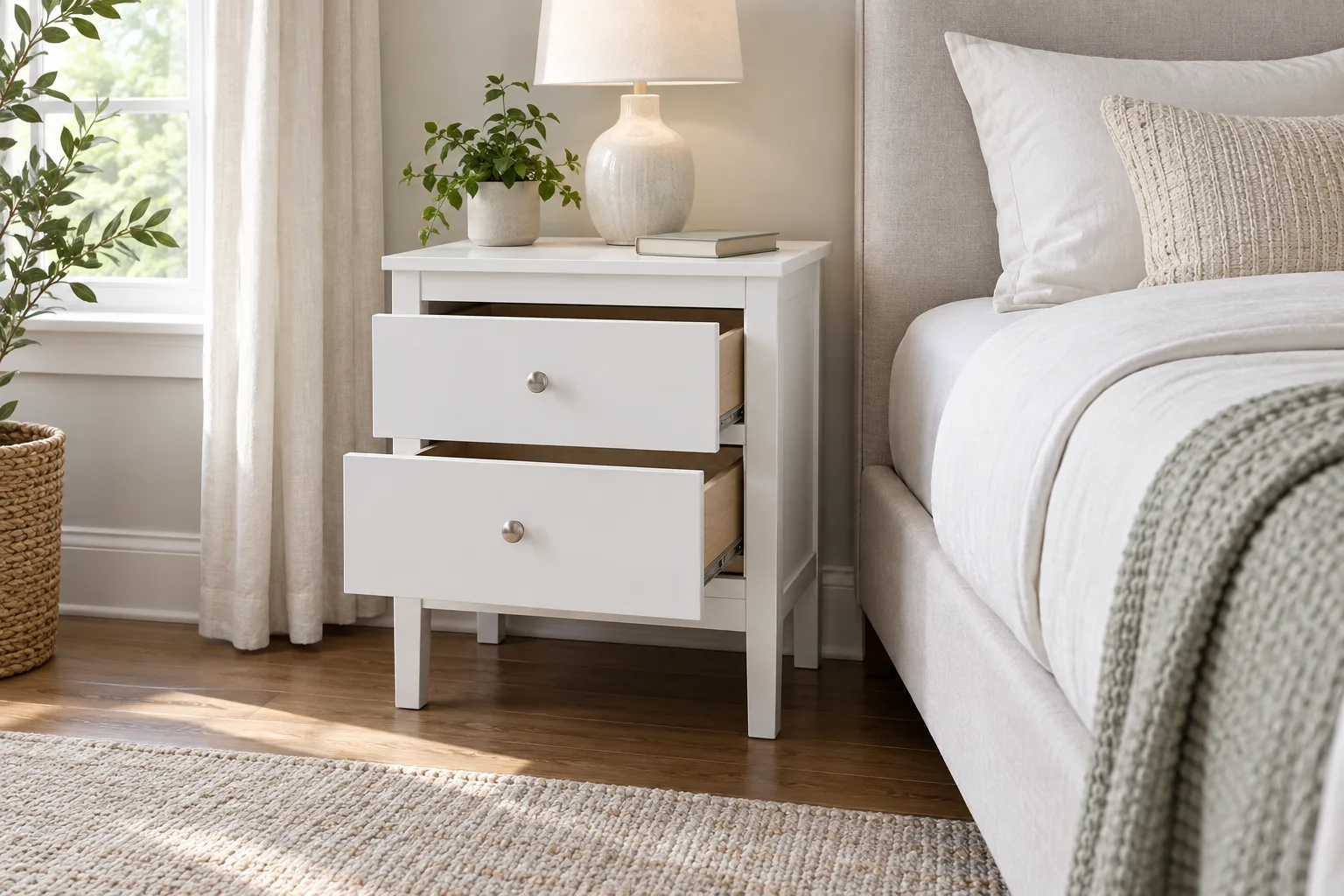
Decide who will sit and what needs to be stored
An entryway bench with drawers combines a seat with closed storage, so start with both jobs. Think about who will use the seat and whether it is mainly for changing shoes, setting down a bag, or waiting near the door. Then list the items that should fit inside: scarves, gloves, pet supplies, shoe-care items, or small accessories. These items determine the drawer dimensions that matter.
A bench that stores bulky footwear may need deeper drawers and more floor clearance; a bench for small accessories can have shallower compartments and a lighter footprint. Do not rely only on the number of drawers. Compare their interior depth and height with the objects you plan to keep there. If the bench will hold shoes, check whether the drawers have ventilation or whether footwear should be stored elsewhere.
Find a seat height that is easy to use
Seat height affects how easily someone can sit down and stand up. Compare the listed height with a chair or bench already comfortable for the people who will use it. A thick cushion may compress after sitting, so check whether the manufacturer lists the upholstered or frame height. If children or older adults will use the bench, prioritize stable support and a clear path to stand.
Seat depth also matters. A deep bench can be comfortable for longer sitting but may project farther into the entry. A shallow seat preserves space yet may be less supportive. Consider whether a backrest is needed; a bench without one can tuck against the wall more easily, while a back changes how much wall area and walkway the piece occupies.
Measure drawer travel and walking space
Measure the bench footprint and the distance needed to open each drawer. A drawer that looks shallow in a product photo can still extend into the main walking route. Mark both the closed and open positions on the floor, then try walking through the space around them. If the entry door swings toward the bench, test the full door arc before choosing the piece.
Check whether drawers slide straight out or pull from the front in a way that requires extra hand space. Handles may project beyond the body, and a cushion can overhang the frame. Account for those details in a narrow hall. If the drawers will be opened while someone sits on the bench, confirm that knees and feet have room to move.
Inspect frame, cushion, and load details
The frame should support the stated use, and the listing should provide a weight limit when relevant. Look for details about joints, center supports, legs, and the seat base. A long bench with too few support points may flex, particularly when several people use it. Do not treat decorative trim as evidence of structural strength; use the manufacturer’s specifications and assembly instructions.
For an upholstered seat, check fabric content, removable covers, cleaning instructions, and cushion construction. A tight weave may be easier to keep tidy than a loose texture, but actual stain resistance depends on the fabric and finish. FTC guidance explains textile content claims for household furnishings; the product label and manufacturer’s care information apply to the specific bench. If spills are likely, choose a surface and care plan that fit the household.
Choose storage that stays accessible
Drawers conceal clutter, but they are most useful when the items inside remain easy to reach. A deep drawer can swallow small objects unless you add organizers; a shallow drawer can make everyday items easier to see. Consider whether one drawer should be reserved for each person or task. Clear ownership and purpose make it more likely the entry stays organized.
Soft-close or full-extension hardware can be convenient, though the listing should identify those features clearly. Check whether the drawers can be removed for cleaning or whether they are fixed to a track. If the bench is placed beside a shoe cabinet or console, make sure their drawers and doors do not collide when open. The full furniture arrangement matters more than how each item looks alone.
Plan material, finish, and installation
A painted, wood, metal, or upholstered bench will read differently in an entryway. Compare the finish with the flooring and nearby trim, and look at the product under more than one lighting condition. A dark bench can anchor a pale hall but may make the space feel more compact. A light surface may show scuffs more readily depending on the finish and traffic.
Review package dimensions and assembly steps before ordering. Confirm the bench can pass through the doorway and turn in the hall, and note which tools are required. If the design is tall, narrow, or includes substantial storage, follow the supplied anchoring instructions and review CPSC furniture-safety information. Secure hardware should be installed as directed rather than skipped because the piece feels heavy.
Make the entryway decision
Confirm seat height, depth, drawer interior measurements, full footprint, load limit, fabric or finish, assembly, and return terms. Compare the bench with the actual entry route and door swing. If it will be used every day, leave enough room for someone to sit while another person passes. A clear floor path is part of the furniture’s functionality.
Entryway benches with drawers are useful when they solve both a seating and a storage need without turning the foyer into an obstacle course. Choose the dimensions around the people and belongings involved, and verify the manufacturer’s safety and care instructions. When the seat feels stable and the drawers are easy to reach, the bench can support a routine rather than simply fill a wall.