Start with how the jacket will be worn
A corduroy jacket can serve as a light overshirt, a structured mid-layer, or a warmer outer layer, and those jobs call for different builds. Decide whether it needs to fit over a tee, a blouse, or a substantial sweater. A close overshirt can look neat indoors but feel restrictive over knitwear. A roomy chore shape is more flexible for layering, although its hem and shoulders may look oversized when worn over a thin top.
Think about the weather and the places where the jacket will be used. A soft unlined layer is easier to carry and can work across transitional days. A lined jacket adds warmth and structure, but it can become uncomfortable inside heated spaces. The product title may use words such as coat, shacket, or jacket loosely, so compare the garment measurements, lining description, and closure rather than relying on the label alone.
Understand wale, weight, and fabric content
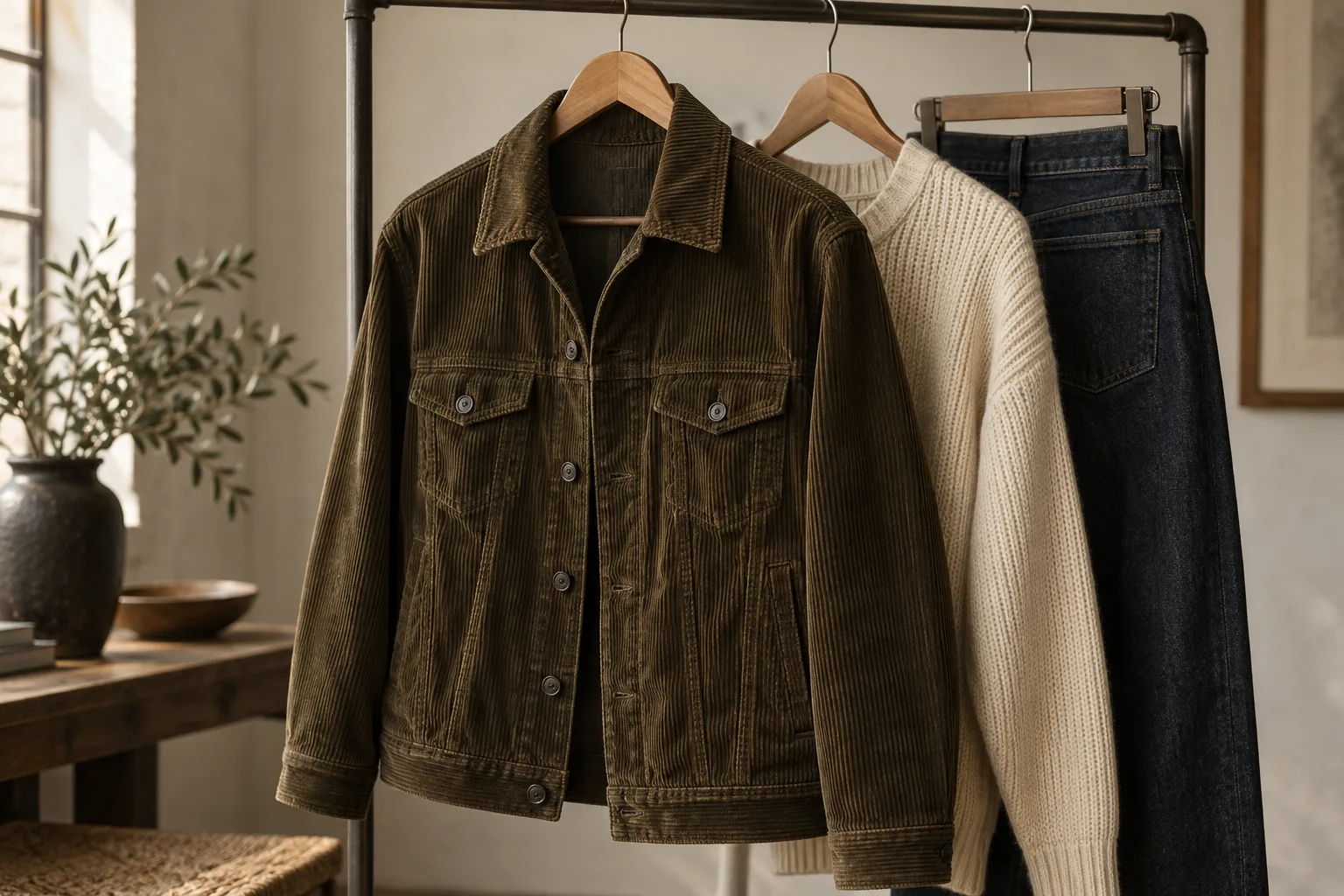
Corduroy is defined by raised parallel ribs, often called wales. Finer wales create a tighter, smoother surface, while wider wales make the texture more obvious and visually casual. Neither is automatically more durable or more comfortable. Compare the fabric close-up with the garment’s intended use, then check the fiber content and any stretch component. A small amount of stretch can change mobility, but the cut and recovery still matter.
Weight affects warmth, drape, and how the jacket holds its shape. A lighter cord can behave more like a shirt and pack more easily; a heavier fabric can feel substantial and keep a sharper outline. Product photographs often use lighting that exaggerates texture, so zoom in on close-up images and read the full composition. For care and fiber details, use the garment’s own label and the retailer’s complete description as the final reference.
Check shoulder fit before sleeve length
The shoulder seam is a useful first checkpoint. On a tailored jacket it usually sits near the shoulder edge; on a dropped-shoulder style it intentionally falls lower. Compare the stated shoulder width with a jacket that already fits the way you want. Then assess the chest and upper arm, because corduroy can feel less forgiving than a thin woven shirt when the sleeve is narrow or the armhole is high.
Sleeves should work with the layer beneath them. Try to compare sleeve length while your elbows are bent, not only with your arms hanging straight. If the listing gives garment measurements, check them against a jacket you own rather than assuming a familiar size maps consistently across brands. A shorter sleeve can be altered more easily than a tight shoulder, so prioritize the areas that are difficult to change.
Inspect closures, pockets, and lining
Buttons, snaps, and zippers each change the jacket’s feel. Buttons are easy to replace but can pull across the chest if the fit is too close. A zip front can sit flatter beneath a coat, while snaps may make the front quicker to open. Look at the front when fastened and unfastened, and check whether the placket stays smooth. The closure should support the intended shape instead of forcing the jacket to hang awkwardly.
Pockets are valuable when they lie flat and sit where your hands naturally reach. Large patch pockets reinforce a workwear look and hold small items, but objects can add visible bulk. Slanted pockets may be more convenient while walking. A full lining improves glide over sleeves and can add warmth, but it also adds weight and may make the jacket less breathable. Decide which construction suits your routine rather than treating extra details as automatic upgrades.
Choose a color that earns repeat wear
Olive, brown, navy, black, and cream all behave differently in a wardrobe. Earth tones lean casual and pair easily with denim, while black or navy can make the texture feel more restrained. Pale corduroy may show marks sooner and can require more careful storage. Before choosing a color, identify three tops and two bottoms you already own that could work with the jacket. That quick test is more useful than building an outfit around a single product photo.
The ribs create highlights and shadows, so corduroy may look lighter or darker depending on the direction of the nap and the room’s lighting. Review multiple product images if available and check customer photos for color under ordinary light. Avoid assuming that two garments with the same color name will coordinate exactly; small differences in warmth and texture can be noticeable when worn side by side.
Care for the surface without flattening it
Corduroy needs care that respects its pile. Follow the garment label for washing, drying, and pressing, and avoid applying direct high heat unless the instructions allow it. Brushing or shaking out surface dust may be enough between wears. If the item is washable, turning it inside out can reduce abrasion during laundering, but the label remains authoritative because fiber blends and finishes differ.
Store the jacket with enough space that the ribs are not crushed under heavy garments. A shaped hanger supports the shoulders better than a thin wire hanger, especially for a heavier style. If the pile looks pressed after storage, use the care method approved for that garment rather than improvising with steam. The best purchase is a jacket whose cleaning needs match the time and equipment you actually have.
A final pre-purchase checklist
Before ordering, confirm the finished chest, shoulder, sleeve, and length measurements; check whether the jacket is lined; and read the return terms for the exact color and size. If the retailer offers a size guide, compare its measurements with your own garment rather than relying only on a body-size label. Save the listing details because stock, colors, and return policies can change.
A useful women’s corduroy jacket should fit the layer you plan to wear, suit the temperatures you encounter, and connect to several existing outfits. Wale size and color set the visual tone, while shoulder ease, lining, pockets, and care determine whether the piece becomes practical. Make those trade-offs explicit before checkout and the jacket is less likely to become an attractive but rarely worn closet item.