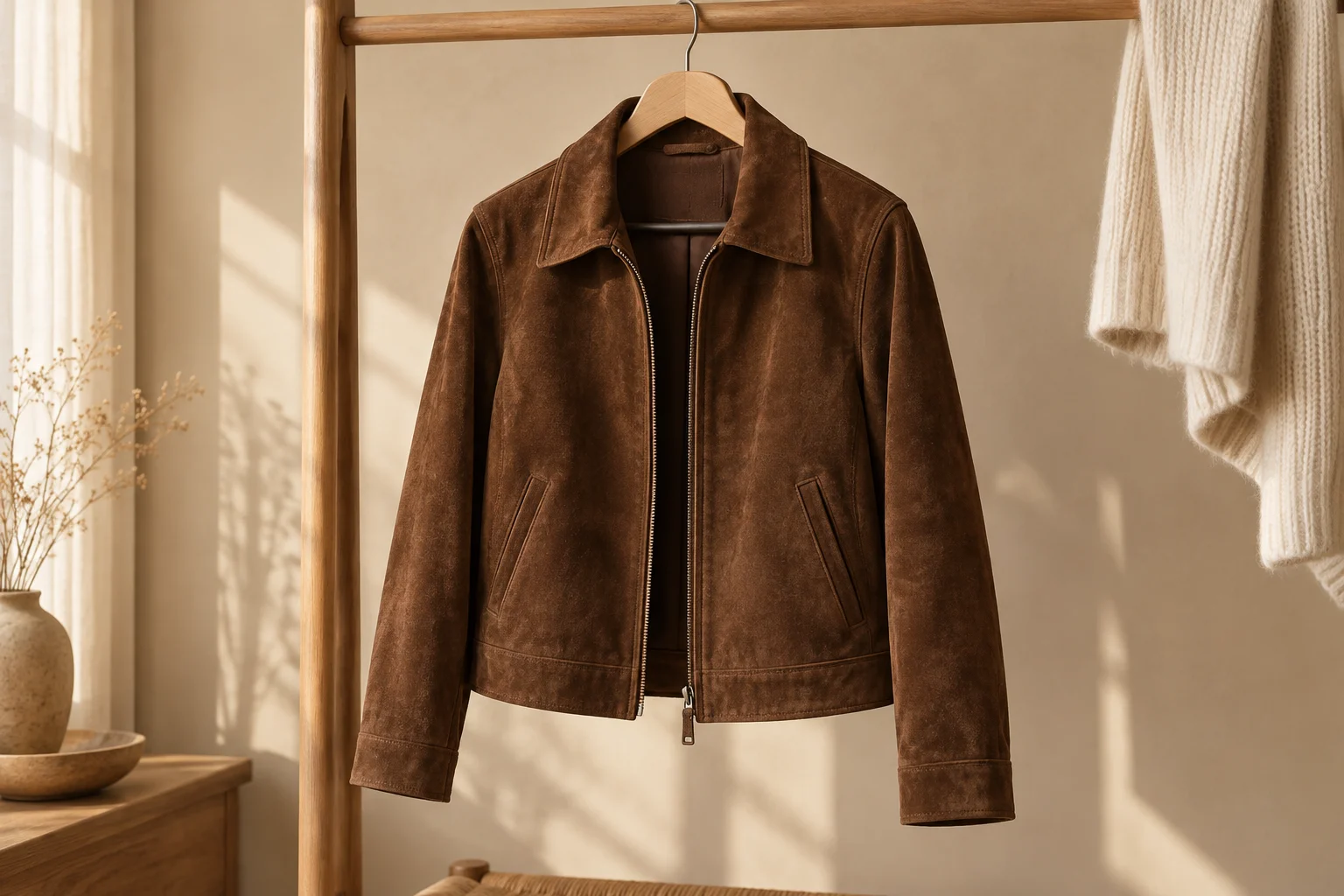
Start with the jacket’s actual job
A brown women’s suede jacket can work as a light transitional layer, a polished alternative to denim, or a soft outer layer for dry-weather outfits. Those jobs demand different constructions. Decide where the jacket will be worn, what it needs to fit over, and how much movement it must allow. A close cropped style may suit dresses and high-rise trousers, while a longer relaxed jacket may be more useful over knitwear and everyday layers.
Write down the conditions before looking at color. Consider commuting, driving, indoor heating, cool evenings, and the amount of rain or abrasion the jacket will meet. Suede has a distinctive surface that rewards careful use, but a fashion image cannot tell you whether the item is suitable for wet weather or repeated travel. The best purchase begins with a realistic routine rather than an idealized outfit.
Confirm suede, faux suede, and surface construction
Read the full material description instead of treating every soft brown jacket as suede. A listing may describe genuine suede, split leather, microfiber, polyester faux suede, or a combination of shell and lining materials. These options differ in hand feel, breathability, weight, cleaning requirements, and resistance to moisture. If the description uses only a color name and the word suede, look for a fiber or leather specification before deciding.
The nap is the short raised surface that gives suede its characteristic depth. In product photographs, lighting can make the nap look more even or more luxurious than it is. Inspect close-up images for patchiness, crushed areas, loose fibers, uneven dye, and visible seam changes. A uniform surface is not the only sign of quality, but unexplained variation can affect how the jacket looks when the fabric changes direction.
Fit the shoulders, chest, and sleeves first
Shoulder fit is difficult to correct, so compare shoulder width and armhole placement before focusing on the hem. Use a jacket that already fits well as a measuring reference. Check the chest with the front closed and with the layer you intend to wear underneath. Suede and suede-like fabrics can have less forgiving movement than a thin knit, especially when the armhole is high or the lining catches on sleeves.
Sleeve length should be tested with bent elbows and forward reach, not only with the arms hanging at the sides. A cropped jacket may need a sleeve that stops cleanly at the wrist, while a relaxed overshirt can tolerate more ease. Measure the finished length against trousers, skirts, and dresses already in your closet. If the shoulders pull or the zipper strains, sizing up may change the silhouette without solving the underlying proportion.
Choose the brown tone around your wardrobe
Brown ranges from light tan and caramel to chestnut, chocolate, and near-black espresso. The tone changes how the jacket pairs with denim, black, cream, gray, olive, and other leather accessories. Use the product name and close-up images together, because warm indoor lighting can make a reddish brown appear more golden. If the purchase needs to coordinate with boots or a bag, compare the materials in daylight rather than relying on a screen match.
Finish also changes the visual weight. A smooth short nap can look tailored, while a longer or brushed surface reads more casual. Distressed edges, contrast stitching, and antique-looking hardware add character but reduce the number of outfits that feel quiet and interchangeable. Before buying, identify at least three combinations using shoes and layers you already own. A beautiful brown jacket earns value through repeat wear, not through a single styled photograph.
Inspect closures, pockets, and lining
A zipper, button, snap, or open front creates a different balance between weather coverage and styling ease. Close the jacket over the intended layer and check whether the front lies flat, the collar sits comfortably, and the hardware pulls smoothly. A belt or tie can change the shape but may become awkward when seated. The fastening should support the jacket’s job rather than serve as decoration alone.
Pockets need to hold the items you actually carry without stretching the front panels. Check opening size, depth, closure, and placement. A pocket that sits too high can be uncomfortable when driving; a low pocket can pull the hem out of line. The lining affects sleeve glide, warmth, and static. Read whether the body and sleeves are lined, then compare that detail with the climate and layers in your routine.
Treat water and abrasion as real limitations
A brown women’s suede jacket should not be assumed to be waterproof because it is sold as outerwear. Genuine suede and many faux-suede fabrics can mark, darken, stiffen, or change texture when exposed to water, though the exact risk depends on the construction and finish. Check the maker’s guidance for weather limits and any approved protective treatment. Do not apply a household spray simply because it is marketed for leather or shoes.
Think about friction from seat belts, shoulder bags, rough walls, jewelry, and repeated contact with a desk or car seat. The nap can wear or flatten in high-contact areas. If the jacket will travel, choose storage that avoids crushing the surface and keep it separate from damp clothing. A jacket intended for occasional dry-weather use should be judged differently from a daily commuter shell.
Plan cleaning, storage, and maintenance
Care instructions belong to the exact item, not to a generic suede rule. Read the permanent label and the retailer’s care page for cleaning, drying, brushing, steaming, and professional treatment. Avoid rubbing a stain aggressively or adding heat without permission. Surface changes can become permanent when the nap is disturbed or the material is dried incorrectly. If care requires a specialist, include that time and cost in the ownership decision.
Store the jacket on a broad supportive hanger in a dry, ventilated space. Avoid compressing the shoulders or covering the surface with plastic for long periods. Let the jacket air according to the label after wear, and keep it away from fragrance, oil, and wet garments. Before the first outing, check the collar, cuffs, hem, pockets, lining, and hardware so a defect is found while the return option is still open.
Verify delivery, returns, and the exact variant
Product pages often group several colors, sizes, and finishes under one listing. Confirm the exact brown shade, material, lining, closure, measurements, care, and stock status in the selected variant. Check delivery estimates if the jacket is needed for a season or trip. Save the order details and the product page because specifications, images, and availability can change after purchase.
Try the jacket indoors on a clean surface with the intended layer and shoes. Keep tags attached and avoid makeup, food, rain, fragrance, and surface contact until the fit is accepted. Inspect seams, nap direction, zipper, lining, cuffs, collar, and pocket bags in daylight. Read the current return policy for worn, treated, altered, or final-sale items before removing anything that could make a return harder.
Final brown women’s suede jacket checklist
Before checkout, record the shell material, nap or surface finish, lining, shoulder width, chest, armhole, sleeve, finished length, closure, pocket dimensions, brown tone, weather limits, care method, storage needs, delivery estimate, and return terms. Compare those details with an existing jacket and the layers the new piece must accommodate. If the listing omits a specification that affects your decision, treat the omission as unresolved rather than filling it with an assumption.
The strongest brown women’s suede jacket balances a useful silhouette with a surface you can maintain. Choose the material for the weather you actually meet, the fit over real layers, and the care routine you will follow. Confirm current product information on the retailer or maker page before buying, because color, stock, and policies change.


