Measure the calf where the shaft will sit
The phrase wide calf is not a universal measurement. Measure around the fullest part of your calf while standing naturally, then compare that number with the boot’s shaft circumference. Check where the product gives its measurement: the opening at the top can differ from the circumference lower on the shaft. If the listing omits this information, ask before ordering rather than relying on a category label.
Measure both legs if they differ and consider the socks or trousers you will wear inside the boot. A close-fitting shaft over bare legs needs a different amount of ease from one worn over denim. The goal is comfortable closure without a large gap that changes the silhouette. Take the measurement over a thin layer if that matches your intended use and use the same method when comparing different listings.
Compare shaft height and calf width separately
Shaft height is measured from the sole or heel area to the top of the boot, while shaft circumference describes width. A boot can have a generous opening and still feel tight lower down, or fit the calf while sitting too high behind the knee. Compare both specifications. The height should allow you to walk and bend your knee without the top edge digging in or folding sharply.
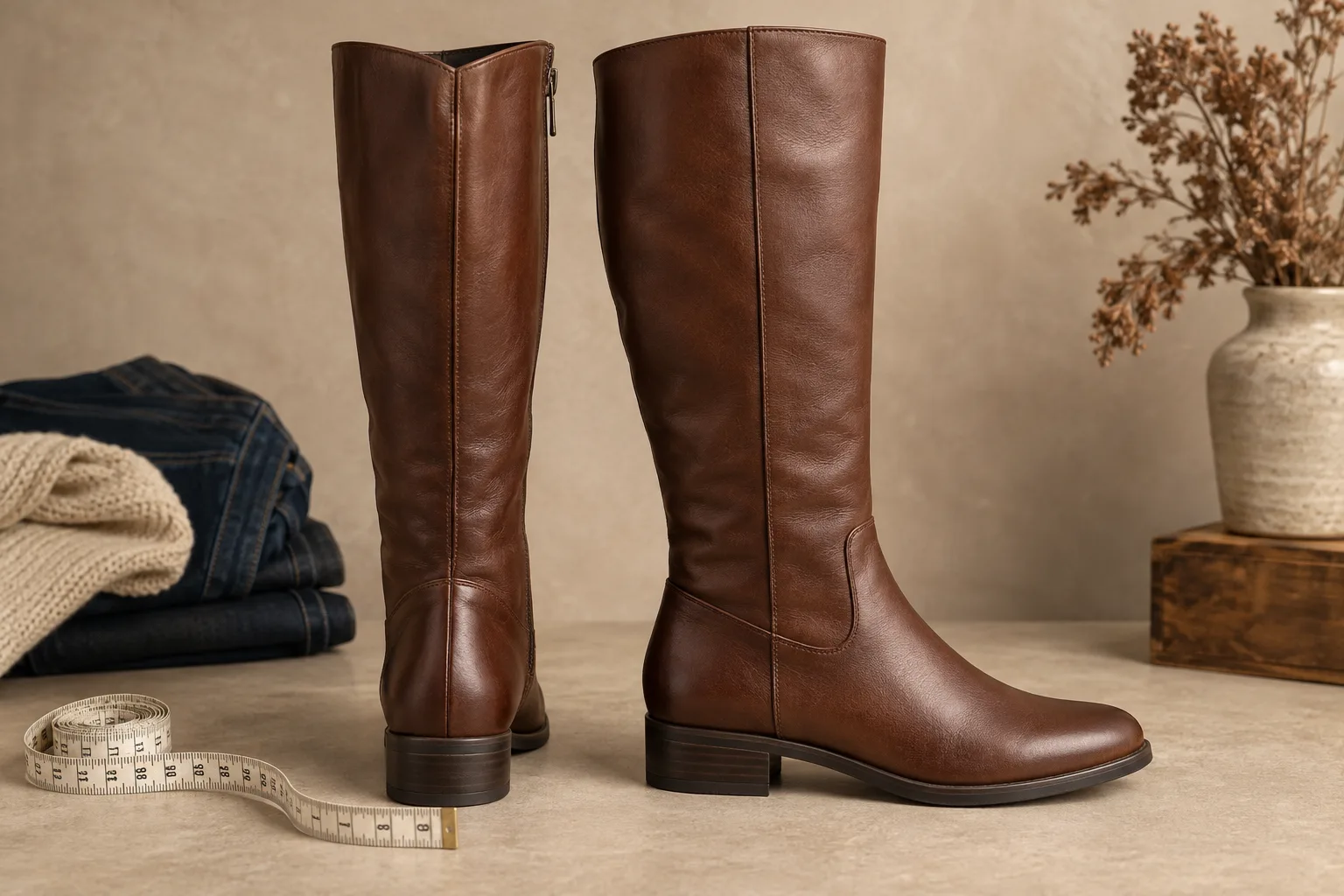
The boot’s shape changes how it fits. A straight shaft has a consistent outline; a contoured shaft narrows near the ankle; a slouch style uses extra material that gathers. Look at side and rear images to see the shape rather than relying only on a front-facing photo. If the listing shows a model, use that image for style context, not as a measurement reference, because calf proportions vary.
Check foot fit, instep, and closure
A wide shaft does not guarantee a comfortable foot. Check the size guide, toe shape, heel height, and return conditions independently. If you use an orthotic or thicker sock, verify that the insole can accommodate it. The instep should not feel compressed, and the heel should stay secure enough to avoid excessive slipping. A boot that is comfortable at the calf but unstable underfoot is still the wrong fit.
Zippers, elastic panels, and adjustable gussets affect how the boot opens and closes. A full-length side zipper can make entry easier, while elastic panels allow some movement with the leg. Check whether the zipper has a backing and whether it lies against skin or fabric. Buckles can add adjustability but may not change the circumference enough to solve a true measurement mismatch.
Use the return window as part of the fitting plan
Try boots indoors on a clean surface and with the socks or trousers intended for regular wear. Walk, sit, flex the ankle, and bend the knee. The shaft should not pinch when seated or slide down with each step. Inspect whether the zipper stays closed and whether the top edge rubs. Keep tags and packaging until you are confident about the fit, and follow the retailer’s instructions for returns.
Before checkout, confirm whether the boot is final sale, whether return shipping is paid by the shopper, and how long a return can take. Some retailers treat worn soles differently from unworn footwear, so an outdoor test can remove options. If the boots are for a trip or event, order early enough to exchange a size or style. An accurate measurement reduces guesswork but does not replace trying the actual pair.
Choose brown and material with use in mind
Brown ranges from light tan to deep espresso, and each shade coordinates differently with denim, black, cream, olive, and burgundy. Look at the color in multiple product images because warm lighting can shift it. A medium chestnut can be versatile; a very light brown may make the boot more casual, while a near-black brown can function like a dark neutral. Match the finish to the clothes you already wear.
Read how the material is described. Genuine leather and imitation leather should not be treated as interchangeable terms, and surface appearance alone cannot confirm composition. The FTC’s leather guides address claims about leather and imitation-leather products. Also compare lining, flexibility, and care details. The material and finish influence how the boot responds to moisture and scuffs, so use the manufacturer’s instructions rather than assuming all brown boots need the same treatment.
Pair the shaft with hems and layers
Knee-high boots work with skirts and dresses when the hem leaves enough space to show the shaft or creates a deliberate continuous line. With trousers, check whether the leg fits inside the boot or should fall over it. A straight or narrow trouser is easier to tuck than a wide leg. Test the combination while seated, because fabric can bunch behind the knee after standing for a while.
Consider the overall visual weight. A sturdy sole and wide shaft can balance a substantial coat or knit; a slimmer shaft may look more at home with a fluid dress. Choose a heel height that matches the amount of walking you expect. If the boots are mainly for commuting, comfort and grip may outweigh a taller heel. A shoe should serve the route you take rather than just the outfit you imagine.
Maintain the boots and decide confidently
Follow the product’s care instructions for cleaning, drying, conditioning, and storage. Keep boots dry before placing them in a closed closet, and use support that helps the shaft hold its shape without stretching it. Avoid unverified cleaners on a finish you cannot identify. If a boot becomes wet, use the manufacturer’s recommended drying method rather than placing it close to direct heat.
Brown wide calf boots are a considered purchase because fit depends on both foot and shaft. Confirm circumference and height, test the instep and closure, and try the pair with the layers and shoes you will use. When the measurements, return policy, and outfit plan all make sense, choose the style that provides enough room without constant adjustment. That is a more useful standard than relying on a wide-calf label alone.